Choosing the right fabric is one of the most important decisions when developing a shapewear collection. The material affects more than just how a garment feels. It also determines its stretch, compression, recovery, durability, and overall fit.
Every fabric behaves differently under wear and repeated washing, which means material choice directly shapes how well your final product matches your brand’s design goals.
In this post, we break down mainstream shapewear fabric options, how fabric makeup translates to real-world product performance, and the key points brand teams need to evaluate before locking in materials for their upcoming line.
What Is the Most Common Fabric Used in Shapewear?
Nylon-spandex blends dominate the shapewear industry for good reason. They strike a practical balance of durability, stretch, softness and shape retention, working well across a broad range of compression apparel.
Why Are Nylon and Spandex Commonly Blended?
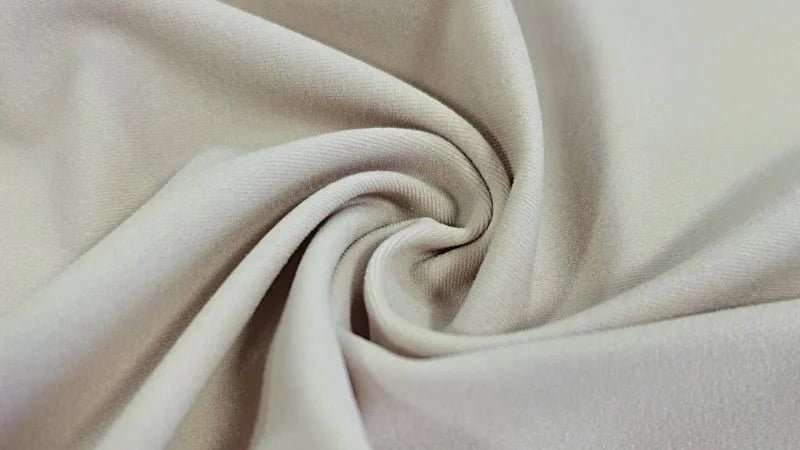
Nylon, or polyamide, brings tensile strength and abrasion resistance, paired with a sleek, smooth surface. It holds up well to repeated wear and washing without sacrificing comfort, which makes it a reliable base for stretch apparel.
Spandex, also referred to as elastane, delivers the elastic power that lets shapewear stretch to follow body contours and snap back to its original form afterward. Poor elastic recovery is a common pain point: garments can turn stiff, lose their fit quickly and fail to deliver consistent shaping support.
When woven together, the two fibers carry separate, complementary functions: Nylon forms the fabric base, delivering structural strength and a smooth hand feel. Spandex supplies stretch and elastic recovery to keep the garment snugly fitted.
This pairing works perfectly for pieces that need to sculpt the body while still letting the wearer move naturally. It also gives brands plenty of flexibility. Nylon-spandex fabrics can be engineered to different weights, stretch grades and knit structures, suited for shaping shorts, bodysuits, waist cinchers and other compression-focused styles.
Does a Higher Spandex Percentage Mean Better Shapewear?
Not at all.
More spandex will change elasticity, recovery and compression characteristics, but higher spandex content alone does not equal stronger shaping or better quality. The overall performance relies on a full set of factors: yarn specs, knit construction, fabric weight, fabric tension and how the garment is patterned and sewn.
For instance, two fabrics with identical nylon-spandex ratios can behave very differently simply because of differences in knitting structure or raw yarn quality. The ideal blend is chosen based on your target compression level, fit goals and product construction — rather than chasing a higher elastane percentage.
Other Common Materials Used in Shapewear and Their Characteristics
Although Nylon and Spandex are common choices, other fibers and fabric structures also have important roles in shapewear manufacturing. The following table provides a quick overview of these materials and their typical applications.
Quick Overview of Common Shapewear Materials
| Material | Main Characteristics | Typical Applications |
|---|---|---|
| Polyester | Durable, dimensionally stable, wrinkle-resistant | Selected shaping garments and stretch fabric blends |
| Power Mesh / Powernet | Elastic mesh structure, targeted support and reinforcement | Abdominal panels, waist support and inner layers |
| Cotton | Soft and moisture-absorbent | Inner layers and selected skin-contact areas |
| Microfiber | Smooth surface, lightweight and soft feel | Close-fitting garments and inner layers |
Note: These materials serve different purposes. Some are fiber types, while others refer to fabric structures or constructions.
Polyester
Polyester is another synthetic fiber used in apparel because of its durability, dimensional stability, and relatively good resistance to wrinkles. When blended with Spandex, it can provide stretch and recovery for certain shaping garments. Its performance depends on the fiber specifications and fabric construction.
For brands, polyester blends may be worth considering when evaluating cost, durability, and the intended appearance of a product. However, polyester and Nylon are not interchangeable in every application. Their surface feel, moisture behavior, and fabric performance can differ.
Power Mesh and Powernet
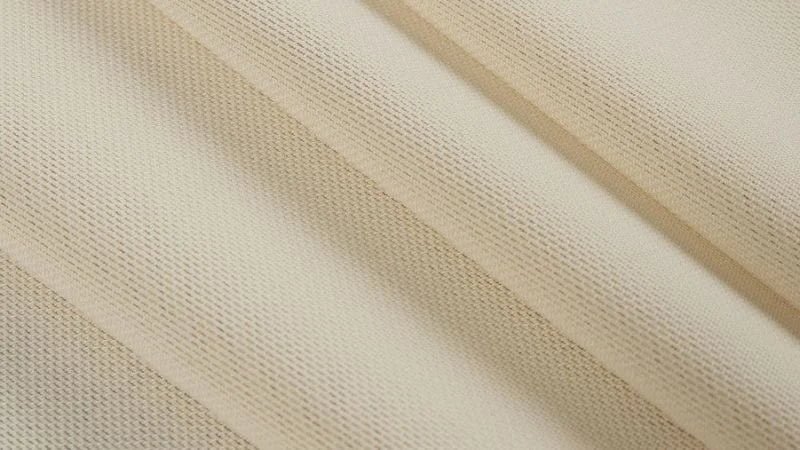
Power Mesh and Powernet are elastic mesh fabrics commonly used in shapewear to provide targeted support. Unlike ordinary lightweight mesh, these fabrics are developed with specific stretch and support characteristics. They can be incorporated into areas where additional control or reinforcement is required.
Common applications include:
- Abdominal control panels
- Waist and side support sections
- Inner support layers
- Reinforced areas in bodysuits and waist trainers
They are also frequently combined with other stretch fabrics rather than used as the only material throughout a garment. For shapewear brands, Power Mesh and Powernet are particularly useful when a design requires different levels of support in different body areas.
Cotton and Microfiber
Cotton is known for its softness and moisture absorption. In shapewear, it may be used in selected inner layers or areas where a softer contact surface is desirable. Microfiber, on the other hand, describes fabrics made from very fine fibers rather than one specific fiber composition. Microfiber fabrics can be produced from polyester, Nylon, or other synthetic fibers.
They are often chosen for their smooth surface, lightweight feel, and soft touch. For product development, these materials are generally considered according to their intended function and position within the garment, rather than as direct replacements for the main compression fabric.
How Do Fabric Combinations Affect Shapewear Performance?
Knowing the fiber content is only the starting point. A fabric label might show 80% Nylon and 20% Spandex, but this information alone cannot tell you exactly how the finished garment will perform.
Several other factors influence the result.
Fiber Composition and Blending Ratios
The proportion of each fiber affects the overall characteristics of the fabric. For example, changing the Spandex percentage may influence stretch, recovery, and fabric tension. However, the result also depends on the type and specifications of the yarns used.
There is no single Nylon-Spandex ratio that works for every shapewear product. The appropriate composition should be evaluated alongside the fabric structure and the garment’s intended function.
Fabric Weight (GSM)
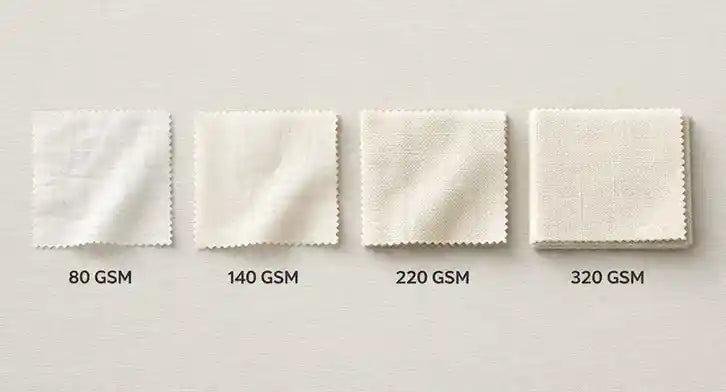
GSM stands for grams per square meter. It measures the weight of a fabric and is commonly used when comparing material specifications. When comparing fabrics with the same fiber composition, a higher GSM generally means a heavier, thicker-feeling fabric, while a lower GSM usually provides a lighter feel. Fabric weight can also influence coverage, thickness, and overall wearing comfort.
However, higher GSM does not automatically mean stronger compression. A lighter fabric with a suitable structure may provide more support than a heavier fabric with less effective stretch and recovery. Brands should evaluate GSM together with fabric construction and stretch performance.
Stretch and Recovery
Stretch determines how far a fabric can extend under tension, while recovery describes how well it returns toward its original dimensions after the tension is released. Both properties matter in shapewear.
A fabric with insufficient stretch may restrict movement or create excessive pressure. A fabric with poor recovery may gradually lose its original fit after repeated wearing. For this reason, fabric evaluation should consider both horizontal and vertical stretch, as well as recovery after repeated extension.
Research published in The Journal of the Textile Institute has also examined how elastane specifications and knitted loop structures influence the stretch, recovery, and compression properties of polyamide-elastane fabrics used in compression garments.
Fabric Structure and Layering
Fiber composition is only one part of the material equation. Knitting and weaving structures also affect how a fabric stretches, supports the body, and responds to tension.
For example, a shapewear bodysuit may combine a main Nylon-Spandex fabric with Power Mesh panels in selected areas. This allows the garment to use different fabric characteristics according to the support requirements of each section.
The same principle applies to waist trainers and high-compression garments, where multiple fabric layers may be used to create different levels of support. The goal is not to use the strongest fabric everywhere, but to match each material to the function of the garment section.
How to Choose the Right Material for Your Shapewear Product
There is no universal fabric specification for every shapewear design. Before selecting a material, brands should consider the product type, intended compression level, comfort requirements, and manufacturing method.
Here are several practical considerations for product development.
Start With the Product Structure and Intended Function
Different shapewear products have different construction requirements.
| Product Type | Main Material Considerations |
|---|---|
| Shapewear Bodysuits | Stretch, recovery, smooth appearance, and targeted support |
| Shaping Shorts and Briefs | Abdominal control, waistband stability, and comfortable leg openings |
| Waist Trainers | Strong support, structural stability, and suitable reinforcement materials |
| Seamless Shapewear | Yarn specifications, knitting structure, and controlled stretch |
For example, a shaping bodysuit with built-in foam cups may require different materials for the body, cup area, and support panels. A high-waisted shaping short may place greater emphasis on abdominal control and waistband stability. Starting with the actual garment structure makes material selection much more practical.
Match the Fabric to the Required Compression Level
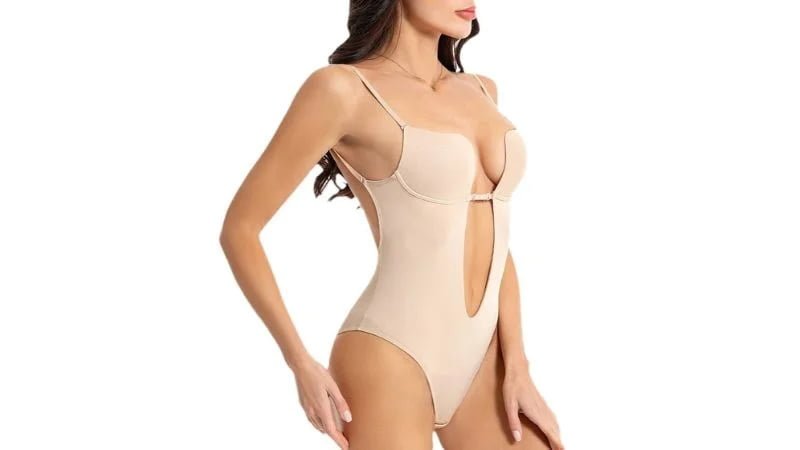
Brands should define whether the product is intended for light smoothing, moderate shaping, or stronger compression. This requirement influences the fabric’s stretch and recovery specifications, weight, structure, and the way different panels are assembled.
It is also important to consider the target size range. A fabric that performs well in one size may not deliver the same fit and support across a wider size range without appropriate pattern and construction adjustments.
Consider Comfort and Durability
Compression should not be the only priority.
A successful shapewear product also needs to provide a comfortable fit during normal movement. Softness, breathability, fabric recovery, and resistance to repeated wear and washing should all be considered.
For garments worn directly against the skin, brands may also request relevant material safety documentation based on their target markets and product requirements. OEKO-TEX® STANDARD 100 provides testing for harmful substances in textiles and their components. The applicable product class depends on the intended use and skin-contact conditions.
Check Compatibility With the Manufacturing Process
Not every fabric is suitable for every manufacturing technique.
Cut-and-sew, seamless knitting, and bonded construction each have different material requirements.
- Cut-and-sew: Allows different fabric panels to be cut and assembled according to the garment design.
- Seamless knitting: Uses knitting structures and yarn specifications to create different stretch and support zones.
- Bonded construction: Requires suitable fabric surfaces and adhesive systems to achieve reliable bonding.
The material should therefore be evaluated together with the intended production process, rather than selected independently.
Common Problems Caused by Improper Fabric and Construction Selection
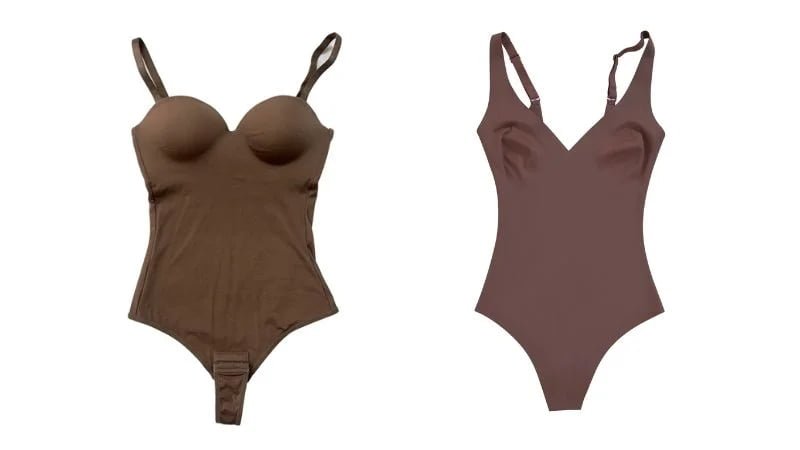
Choosing an unsuitable fabric or failing to match it with the garment structure can create problems during sampling and bulk production. Some issues may appear only after the garment has been stretched, worn, or washed repeatedly.
| Common Problem | Possible Causes | What Brands Should Check |
|---|---|---|
| Loss of elasticity | Insufficient recovery or unsuitable material specifications | Stretch and recovery performance |
| Weak shaping support | Fabric structure or garment construction does not provide the required support | Compression requirements and panel design |
| Fabric becomes see-through | Insufficient coverage or unsuitable fabric density under stretch | GSM, fabric structure, and stretch |
| Waistband rolling | Fabric tension, pattern design, or waistband construction is unsuitable | Elastic recovery and garment fit |
| Pilling and abrasion | Fiber characteristics and surface construction | Fabric durability and abrasion resistance |
| Inconsistent sizing | Fabric batch variation or inadequate production control | Material consistency and dimensional stability |
These problems are not always caused by the fabric alone. Pattern development, cutting accuracy, sewing tension, bonding conditions, and production quality control can also influence the finished garment.
This is why material selection should be followed by proper sample evaluation. Before approving bulk production, brands should check the garment’s fit, stretch, recovery, appearance, and performance after laundering. If adjustments are needed, they should be made during sampling rather than after the order has entered mass production.
Conclusion
Nylon and Spandex remain a practical and widely used combination for shapewear, but the best material depends on the garment’s structure, compression requirements, and intended use.
Choosing the right fabric is only the first step. Matching the material with the right construction method and maintaining consistent quality from sampling to bulk production are equally important.
Develop Your Shapewear Collection With the Right Materials
At XS Lingerie, we work with different stretch fabrics and manufacturing techniques to develop shapewear for established brands. Our capabilities cover cut-and-sew, seamless knitting, and bonded construction, allowing us to support different product structures and material requirements.
Already have a tech pack or a reference sample? Send it to our team. We can review the construction, discuss suitable fabric options, and evaluate the sampling requirements for your project. Contact us to discuss your shapewear development project.
Frequently Asked Questions About Shapewear Materials
Q1: What is the best fabric composition for shapewear?
Nylon and Spandex blends are common choices because Nylon provides strength and a smooth feel, while Spandex adds stretch and recovery. The ideal composition depends on the garment’s structure, required compression, and fabric construction.
Q2: Why is Nylon and Spandex commonly used in shapewear?
The combination offers a practical balance of durability, flexibility, and a close fit. It can be developed in different fabric weights and structures for various shapewear applications.
Q3: Is higher Spandex content better for shapewear?
Not necessarily. Higher Spandex content can influence stretch and recovery, but compression also depends on yarn specifications, fabric structure, weight, and garment construction. The right composition should be selected according to the product’s requirements.
Q4: What is Power Mesh used for in shapewear?
Power Mesh is commonly used for targeted support and reinforcement. It can be incorporated into abdominal panels, waist sections, and other areas where additional shaping support is required.
Q5: Can different fabrics be combined in one shapewear garment?
Yes. Many shapewear designs combine different fabrics to achieve specific functions in different areas. For example, a bodysuit may use Nylon-Spandex as its main fabric and Power Mesh for additional abdominal support.