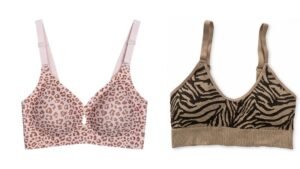
Plus size bras have long been an important category in the lingerie market. For lingerie brands, retailers and wholesalers, they are no longer simply an extension of a standard bra range. In many collections, fuller-cup and larger-band products need to be treated as a product program of their own.
The difficulty is that a plus size bra can look quite simple from the outside. A buyer may see a wider strap, a fuller cup and a higher wing and assume that the product has been properly developed for larger sizes. In reality, the challenge is how all of these parts work together.
As cup volume and band size increase, fit, cup capacity, underband stability, fabric recovery and support become increasingly important. Research on larger-breasted women has also found that bra-fit problems remain common, which is one reason brands cannot rely on appearance or stated size range alone when evaluating a plus size bra.
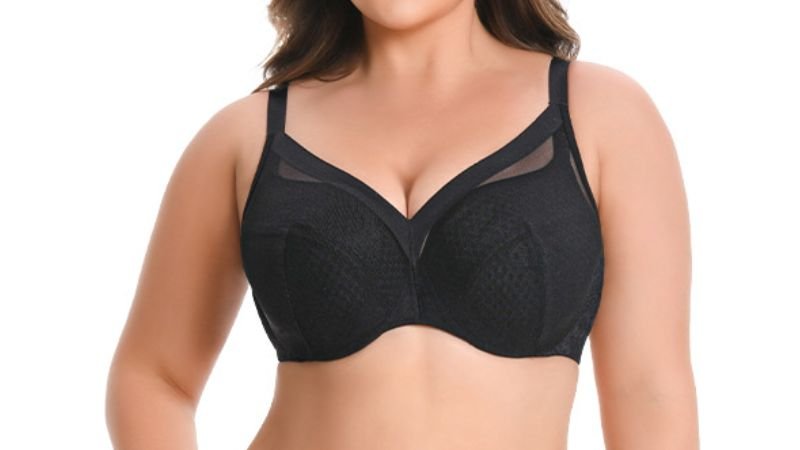
There is another commercial challenge. Not every market wants the same type of plus size bra. Some consumers prioritize full coverage and strong everyday support, while others want wireless comfort, smooth T-shirt bras, feminine lace styles or minimizers. Current plus-size assortments from major lingerie retailers reflect this diversity, with full-coverage, wireless, T-shirt and minimizer categories all occupying distinct positions.
For brands and wholesalers, sourcing plus size bras should start with more than a price list and size chart. This guide explains the main everyday plus size bra styles, the product details brands should evaluate, why size inclusivity requires careful development, and how to choose a plus size bra manufacturer that can support both sampling and bulk production.
What Plus Size Bra Styles Are Popular in Today’s Market?
When brands and wholesalers build a plus size bra collection, style selection should start with the needs of their target market. Plus size bras are often developed for women with fuller and heavier busts, so coverage, support, comfort and shaping usually play a much bigger role than they do in many standard-size fashion bras.
At the same time, not every customer wants the same type of support. Some markets still prefer traditional full-coverage structures, while others are moving toward softer non-molded bras or smooth wireless bonded styles.
For this reason, brands should first understand their customers, sales channels and price positioning before deciding which plus size bra styles belong in the collection.
| Plus Size Bra Style | Main Characteristics | Main Market Need |
|---|---|---|
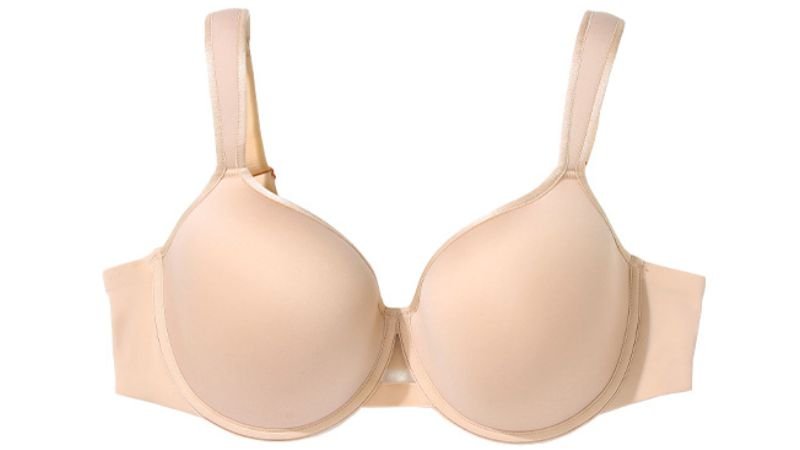
| Full-Coverage Support Bra | Fuller cup coverage, stable underband, higher wings and stronger containment | Everyday support, coverage and security |
| Non-Molded Bra | Soft or multi-piece cups without a molded foam shell; often combined with lace, mesh or lining | Natural shaping, fuller cup depth, lighter feel and greater design flexibility |
| Bonded No-Show Wireless Bra | Smooth double-layer bonded construction, wireless body and low-profile finishing | Seamless-looking appearance, comfort and smooth wear under clothing |
| Minimizer Bra | Fuller coverage and controlled cup construction designed to redistribute bust projection | Reducing visual bust projection while maintaining containment and support |
These four categories serve very different product needs.
A full-coverage support bra is usually developed around containment and stability. It is often an important core style in a plus size collection because fuller-bust consumers need enough cup capacity, a stable underband and sufficient side coverage for everyday wear.
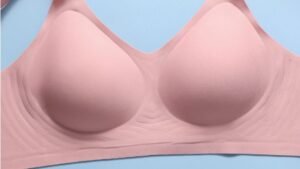
A bonded no-show wireless bra takes a different approach. Instead of relying on a traditional wired frame, the product uses a smooth wireless structure, bonded panels and supportive materials to create a cleaner, more modern appearance. This category is particularly suitable for brands targeting comfort, invisible wear and second-skin styling.
A minimizer bra has an even more specific purpose. Its cup construction is designed not only to cover the bust but also to control and redistribute projection, making it a distinct product for consumers who want the bust to appear less prominent under clothing.
Non-Molded Does Not Mean Unsupported
Non-molded plus size bras deserve special attention because they are sometimes misunderstood. When I first started working with this category, I had the same assumption that many brands have: if a plus size bra does not have a molded cup, how can it properly support a fuller bust? Wouldn’t the breast simply drop without the structure of a cup shell?
After working with more plus size bras, I realized that this assumption confuses molded shape with support. A non-molded bra does not rely on a pre-formed foam cup to create its structure, but that does not mean the bra has no support. Depending on the design, support can come from the underband elastic, underwire or flexible support components, higher wings, shoulder straps, lining and the seam construction of a multi-piece cup.
In particular, cup seams are not only decorative. Different cup panels can be shaped and joined to control cup depth, projection and the direction in which the breast is supported. Combined with a stable underband and appropriate side structure, a non-molded bra can provide substantial support while remaining softer and more flexible than a molded cup.
This is also why non-molded lace bras remain important in the plus size market. Lace or mesh may create a softer appearance, but the visible outer material does not tell the whole story. The real performance depends on the cup construction, lining, underband, wings and supporting components working together.
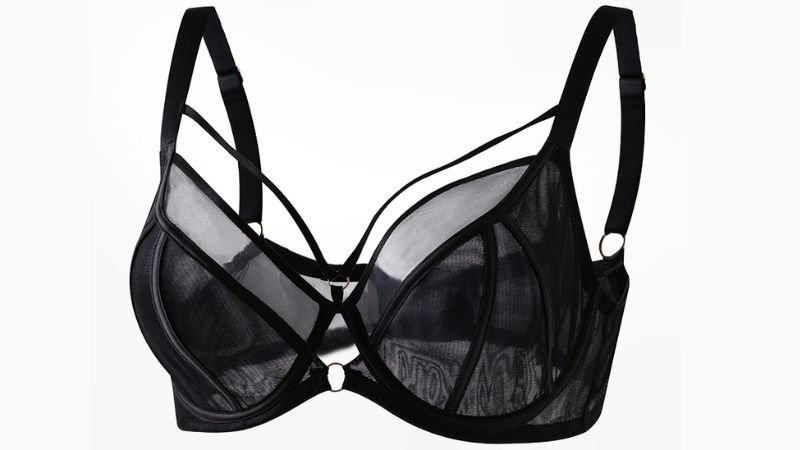
For brands and wholesalers, this is an important distinction when reviewing samples. A molded cup should not automatically be considered more supportive simply because it looks more structured, and a soft non-molded cup should not automatically be considered unsuitable for fuller busts. The right construction depends on the support level, fit, appearance and wearing experience the product is expected to deliver.
Market research should therefore come before sourcing. A traditional support-focused brand may need more full-coverage and non-molded structured bras, while a comfort-oriented brand may place greater emphasis on bonded wireless styles. A wholesaler serving several customer groups may need all four categories at different support levels and price points.
The goal is not to offer the largest number of plus size bra styles, but to build an assortment that matches the real needs of the target market.
What Should Brands Look for When Sourcing Plus Size Bras?
One mistake we often see in plus size bra sourcing is evaluating the product mainly from its visible features. A buyer sees wider shoulder straps, a higher side wing and a larger cup and concludes that the bra should provide good support. But support does not come from one component.
A wider shoulder strap can help distribute pressure, but it cannot compensate for insufficient cup capacity or an unstable underband. In the same way, adding stronger fabric does not automatically solve a poorly developed cup shape.
When we review a plus size bra, we look at the product as a system. The cup first needs enough capacity and depth for the target size. If the breast is being pushed out of the upper cup or side of the bra, increasing strap tension is not the real solution.
The underband also matters because it provides an important part of the bra’s stability. If it stretches too easily, rolls during wear or does not recover properly after stretching, the whole bra can feel less secure.
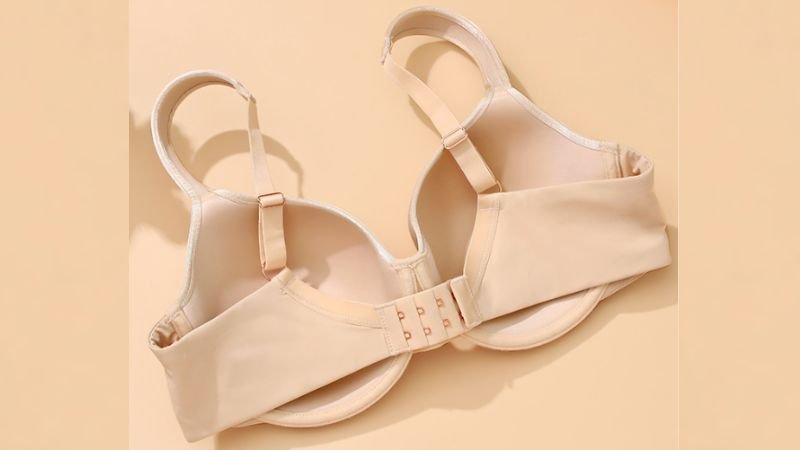
Then there are the wings, straps, wire or wireless structure, lining and elastics. These components need to work with the cup rather than compensate for problems elsewhere. This becomes particularly noticeable when a standard style is extended into larger cups.
A fabric that performs well in a smaller bra may feel very different across a larger cup or wider wing because a greater area of material is being asked to control the garment. This is why we pay close attention to stretch and recovery, not simply fabric composition.
For non-molded lace bras, the same principle applies. A soft lace cup does not necessarily mean the product has little support. A multi-piece cup, appropriate lining, side structure, underband and wire can work together to create a supportive fuller-cup bra without using a thick molded cup.
Molded plus size bras have a different sourcing issue: the cup itself needs to be available and appropriate across the intended size range. Brands should confirm the real molded-cup range before assuming that a supplier can simply extend an existing T-shirt bra indefinitely.
For us, a more useful question than:
“Can you make this style in plus sizes?”
is:
“What needs to change in this style when we develop it into our target plus size range?”
A manufacturer that genuinely understands fuller-cup development should be able to discuss the product in those terms.
Why Size Inclusivity Matters in Plus Size Bra Sourcing
A long size chart does not automatically make a bra collection size-inclusive. For brands, size inclusivity becomes meaningful only when the products at the upper end of the range have actually been developed to fit and perform properly. This is where plus size bra sourcing becomes more technical.
A common approach is to start from an existing standard-size bra and extend the pattern upward. Grading is obviously part of bra development, but larger sizes cannot always be treated as if every dimension should increase in exactly the same way.
As the size range expands, the developer may need to reconsider cup capacity and depth, wire size, center-front dimensions, wing height, strap positioning, closure configuration and reinforcement.
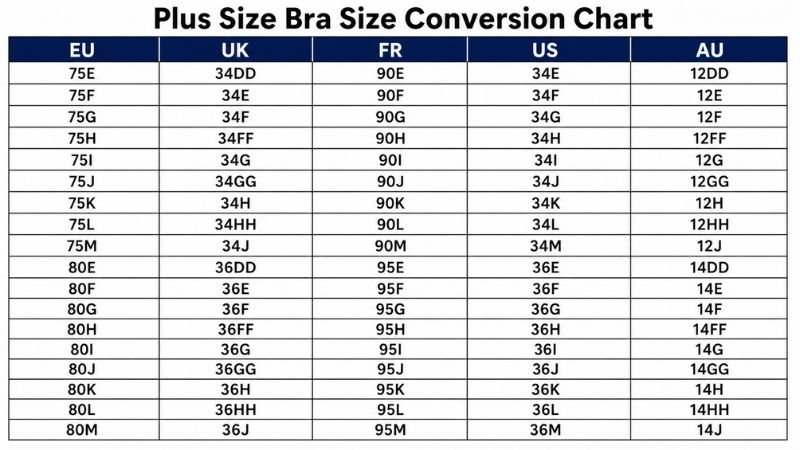
Exactly what changes depends on the design.This is why we are cautious when a supplier simply says:
“No problem, we can make up to H cup.”
The letter on a size chart is not the difficult part. The real question is whether the pattern, cup, wire, elastic, lining and support structure have been developed to perform at that size. The same issue applies during sampling. If a collection will cover a wide fuller-cup range, approving one attractive sample in one middle size does not automatically prove that the whole range will fit correctly.
One approved sample size is not the same as an approved size range. For a wider plus size program, representative fitting sizes become more important. The exact fitting strategy will depend on the size range and product construction, but brands should at least understand how the supplier intends to verify fit as both band and cup sizes increase.
Component availability also matters. A factory may technically be able to grade the paper pattern upward but still face limitations in the available wire, molded cup, hook-and-eye, strap elastic or other components required for the larger sizes. This is something worth confirming before development goes too far.
From a brand perspective, better size development has a commercial purpose. The goal is not simply to display more sizes on the product page. It is to build a range in which the customer receives the support, fit and wearing experience that the brand intended across the sizes being sold.
For plus size bras, size inclusivity is therefore a product-development issue before it becomes a marketing claim.
How to Choose the Right Plus Size Bra Supplier
When brands search for a plus size bra manufacturer, it is easy to find suppliers showing larger bras in their catalogs. That alone tells you very little. The first thing we would look for is actual experience with the type of plus size bra you want to develop.
A factory that has produced non-molded full-coverage bras may understand fuller-cup pattern development but have limited experience with large-size molded T-shirt bras. Another supplier may be very strong in wireless comfort products but less experienced with structured underwire bras.
This is why a buyer should go beyond asking:
“Do you make plus size bras?”
Ask what size ranges the manufacturer has actually produced, what constructions they normally work with, and what happens when the style moves into the larger sizes. The difference between “we can do it” and “we have done it” matters in this category.
Pattern and grading capability is equally important. A capable supplier should be able to explain how the product is being developed rather than simply promising that every size is possible. If the manufacturer cannot explain how cup capacity, wing structure, straps or other components change through the range, this can become a problem later during fitting.
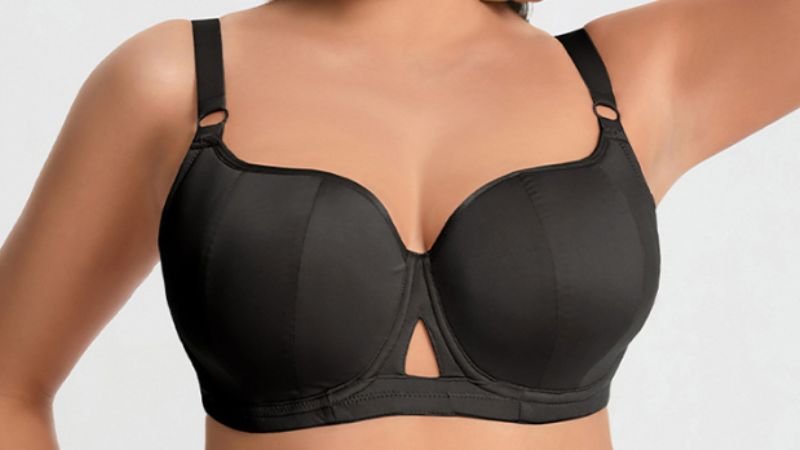
Material and component sourcing should also be checked early. For a plus size bra program, the supplier needs access to appropriate fabrics, elastics, straps, hook-and-eye closures, wires and molded cups where applicable. A design may look straightforward on the first sample but become difficult to scale if one important component is not available across the complete range.
Then there is sampling and production. For brands and wholesalers, a strong plus size bra supplier should not only make a good first sample. The more important test is whether the supplier can move the project through fitting, size development, pre-production confirmation and bulk manufacturing while keeping the approved structure consistent.
This is why we do not recommend choosing a supplier only because it offers the lowest quotation. Price matters, especially for wholesale plus size bras, but a low initial price is not very useful if the project later requires repeated pattern corrections, component substitutions or size-related changes.
The same principle applies to custom plus size bras, private label plus size bras and OEM plus size bra programs. The more customized the product becomes, the more important it is that the manufacturing partner understands the technical reason behind the design rather than simply copying the appearance of a reference sample.
For brands, the strongest supplier is normally not the factory claiming the widest possible size range. It is the factory that can tell you: what it has produced before, what needs to change for your target size range, where the development risks are, and how those risks will be checked before bulk production. That kind of conversation gives you much more information than a catalog alone.
FAQ
Q1: What size range should a plus size bra collection cover?
There is no single size range that works for every brand. The right range should be based on your target customers, existing sales data and market positioning, then confirmed against the manufacturer’s actual pattern and component capabilities.
Q2: Can a regular bra pattern simply be graded into plus sizes?
An existing pattern can provide a starting point, but larger sizes may require more than uniform enlargement. Cup capacity, wing structure, straps, closures, wires and reinforcement may need to change as the range expands.
Q3: What makes a plus size bra supportive?
Support comes from the complete bra structure rather than one visible feature. Cup capacity, underband stability, wings, straps, materials and the wire or wireless support system need to work together.
Q4: Should brands choose molded or non-molded plus size bras?
It depends on the target product. Molded bras work well for smooth, consistent T-shirt styling, while non-molded multi-piece cups can offer more flexibility in shaping, projection, lace design and fuller-cup development.
Q4: What should I send a plus size bra manufacturer before sampling?
A clear tech pack is ideal, but a reference sample can also be very useful. Brands should at least provide the target size range, materials or hand-feel requirements, expected support level, estimated order quantity and any fit requirements that are important to the brand.
Conclusion
Sourcing plus size bras requires more than choosing attractive styles and extending a size chart.
Brands and wholesalers need to consider market demand, product structure, support, fit, size development and the supplier’s actual experience together.
The right styles will vary by market. The right construction will vary by product. And the right size range is only valuable when the bras at the upper end of that range have been properly developed.
For brands, the goal is therefore not simply to find a manufacturer that offers plus size bras. It is to find a partner that understands how a plus size bra needs to change as the product, cup volume and size range change.
Develop Your Plus Size Bra Collection with Bramingle
We have developed and produced wired, wireless, molded and non-molded plus size bras for different customer programs, including fuller-cup styles that required adjustments in cup capacity, support structure, grading and components as the size range increased. Through these projects, we have worked through the practical issues that often appear in plus size bra development—from fit and support adjustments during sampling to size expansion and consistency in bulk production.
If you are developing a new plus size bra collection or extending an existing style into larger cup and band sizes, send us your reference sample, tech pack, target size range and estimated quantity. We can review the project based on our previous plus size production experience and identify the key points that should be confirmed before sampling and bulk production.