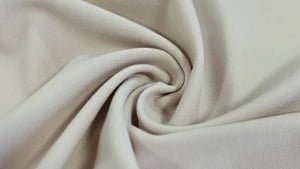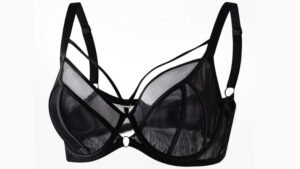
The global shapewear market keeps expanding, but the biggest shifts are happening within product performance itself. Today’s consumers increasingly look for shapewear that combines effective shaping with comfort and flexibility, rather than sacrificing comfort for stronger compression. Consumers want pieces that contour the body, move naturally with them, and offer greater versatility—from invisible shaping under everyday clothing to stylish bodysuits designed to be worn as outerwear.
According to Grand View Research, the global shapewear market reached USD 2.9 billion in 2025, with projections hitting USD 5.4 billion by 2033. This growth is being driven by rising demand for day‑to‑day shapewear, seamless construction, targeted compression, and much broader size offerings.
For lingerie labels, responding to these trends goes far beyond sketching new styles. Success depends on picking suitable fabrics, refining garment construction, rigorous fit testing, and solving mass‑production consistency challenges.
In this post, we walk through key 2027 shapewear market trends. We also cover how shifting consumer expectations impact product development, factory‑level production work, and OEM / ODM sourcing decisions.
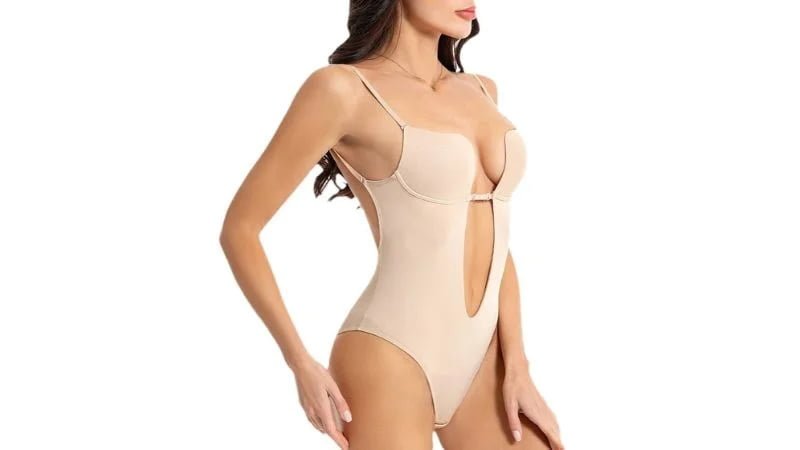
Global Shapewear Market Size and Growth Outlook
Long-term growth for shapewear remains positive, backed by rising consumer appetite and ongoing improvements in elastic garment technology.
According to Grand View Research, the global shapewear market is forecast to grow from USD 3.1 billion in 2026 to USD 5.4 billion by 2033, at an 8.1% compound annual growth rate (CAGR). Fortune Business Insights released its own updated report in September 2026. It values the market at USD 2.99 billion for 2025 and forecasts USD 6.03 billion by 2034, with a CAGR of 8.09%.
Market figures differ across research reports due to variations in market definitions, survey samples and forecast timeframes. However, both reports point to solid long-term expansion.
| Market Indicator | Grand View Research | Fortune Business Insights |
|---|---|---|
| 2025 Market Size | USD 2.9 billion | USD 2.99 billion |
| 2026 Market Estimate | USD 3.1 billion | USD 3.24 billion |
| Long-Term Forecast | USD 5.4 billion by 2033 | USD 6.03 billion by 2034 |
| Projected CAGR | 8.1% | 8.09% |
Market-wide growth does not mean every shapewear segment will perform equally well. Traditional high-compression garments still sell. Even so, customer interest is moving steadily toward everyday-wear pieces, multi-use bodysuits and low-profile shaping designs.
From a manufacturer’s viewpoint, this creates more complex development requests. A lightweight shaping brief, seamless high-waisted short and structured full-body shaper sit in the same product category, yet they call for completely different fabric choices, assembly techniques and quality control standards.
For established brands, winning is not about launching dozens of new styles. It means building products that meet real-world consumer expectations — while remaining manufacturable and consistent at volume.
Key Shapewear Market Trends for 2027
Consumer priorities are rewriting shapewear design and production rules. Comfort, targeted shaping, invisible finishes and reliable fit are no longer nice‑to‑haves; they are core development requirements for new collections. Below are the trends brands need to watch closely.
Everyday Comfort and Targeted Compression
Shapewear is no longer reserved for formal events or special occasions. Lots of consumers now wear shapewear as regular wardrobe staples. One consumer survey published by Grand View Research found 42% of shapewear users wear these items multiple times each week or more.
This shift changes how we approach compression design. While older shapewear commonly featured uniform heavy compression across the body, targeted zoning was also present in many legacy designs. Modern pieces use mixed materials and panel layouts to deliver targeted compression zones: firm support where it is needed, with softer, stretchier sections for natural movement.
Take a shaping bodysuit as an example. The abdomen area may need stronger hold, while bust and hip sections need extra flexibility for body movement and different body shapes.
Getting this balance right relies on fabric stretch‑and‑recovery performance, panel layout, pattern dimensions and repeated fit testing. Simply choosing “softer fabric” will not automatically create comfortable shapewear. Poor seam placement, excess fabric tension or poorly graded sizing will still lead to painful wear.
In production, the real challenge is delivering the intended shaping effect without unnecessary restriction — and reproducing that comfort‑to‑compression balance reliably across your full size run.
Seamless and Invisible Shapewear
Consumers prefer garments without obvious seams, bulky waistbands and visible leg lines showing through outfits.
Market demand has pushed wider adoption of seamless knitting, bonded assembly and free‑cut finishing. Free‑cut fabric refers to material engineered so raw edges do not curl or fray without adhesive or hemming. Bonded construction, by contrast, uses adhesive and heat‑pressure lamination to join fabric components.
Even a “seamless‑labeled” garment can still need sewing or partial assembly in key spots. A free‑cut edge also will not automatically resist rolling or twisting. Final performance depends heavily on fabric selection, pattern geometry and finishing treatments.
When brands source, do not just filter suppliers for “seamless” capability. Your real goal is a smooth, stable fit underneath clothing. Test finished samples thoroughly, paying special attention to waistbands and leg openings — these are where rolling and visible lines most frequently show up.
Multifunctional Shapewear Bodysuits
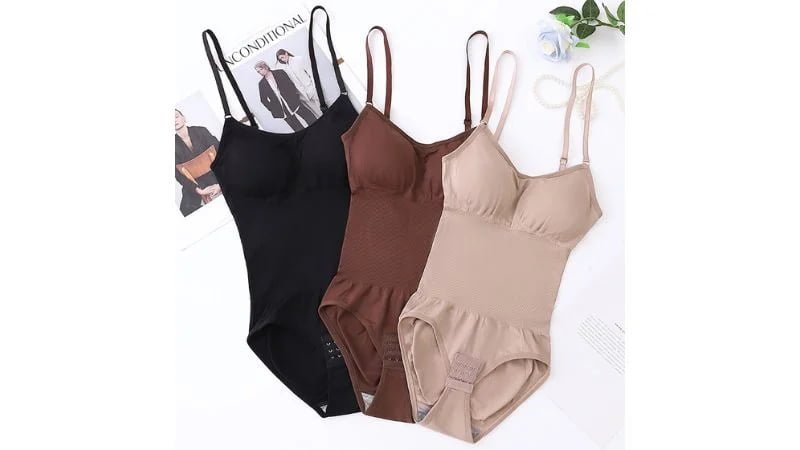
Bodysuit‑style shapewear has evolved far beyond purely hidden under‑layers. Many newer designs feature finished necklines, decorative detailing and fabrics suitable to be worn as outer tops.
This opens new product possibilities: built‑in‑bra bodysuits, shaping camisoles and sculpting tops that customers can wear visibly.
These multi‑use garments are trickier to produce than basic shaping briefs. A bodysuit with integrated bust support must balance cup geometry, under‑bust support, torso length and abdominal compression all at once.
When these elements are out of balance, you will see common defects: shoulder straps pulling tight, uncomfortable pressure across the bust, or shaping performance falling short of design goals.
Developing multifunctional shapewear means iterating both visual styling and internal supporting structures. Decisions over molded cups, removable padding and support panels should tie back directly to your target fit and wearing experience.
Inclusive Sizing and Better Body Fit
Size inclusivity continues to reshape shapewear development. Unlike loose‑fit apparel, shapewear performance hinges on tightly controlled fabric tension and compression. Simple pattern enlargement does not preserve the same shaping effect for plus‑size bodies.
Different body proportions require adjustments to torso length, waist‑hip ratios, bust construction and the positioning of support panels.
A plus‑size shaping bodysuit may need reinforced support in certain zones while keeping enough give around hips and thighs. The same logic applies for high‑waisted shaping shorts, where waistband tension and leg‑opening build directly control rolling and comfort.
Extended size lines need size‑specific fit evaluation, not just an expanded size chart on paper. Always sample and test representative sizes before you lock in bulk production.
Which Shapewear Categories Are Driving Product Development?
Consumer expectations keep growing more specialized. Each shapewear category carries unique structural requirements that influence fabric picks, production workflows and QC checkpoints.
Shapewear Bodysuits
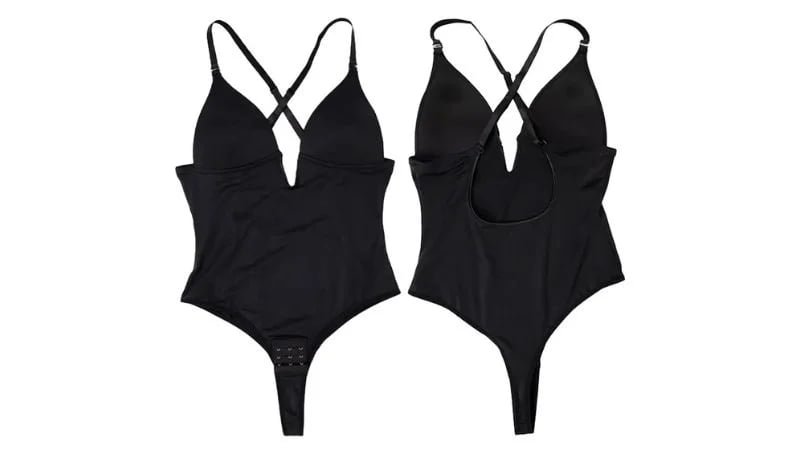
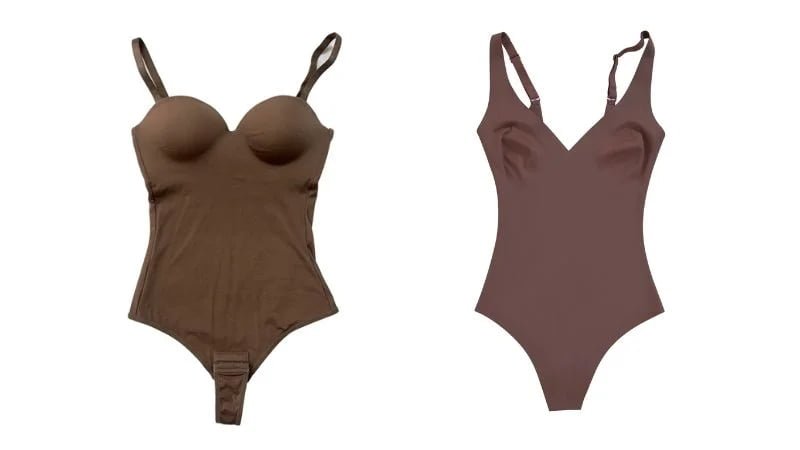
Shapewear bodysuits combine multi‑zone shaping across abdomen, waist, back and sometimes bust within one garment. Designs may include built‑in cups, wire‑free support, adjustable straps and varied necklines.
Production teams need to carefully balance torso length, fabric tension and support placement. Too‑short torso measurements create uncomfortable vertical pulling. Too‑much compression across bust areas ruins fit.
Manufacturers must also consider gusset build, fastener durability and overall ease for putting the garment on.
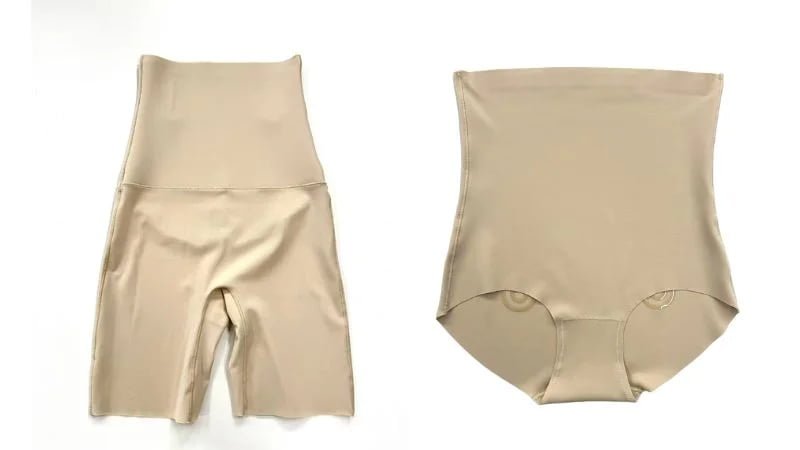
High‑Waisted Shaping Shorts and Briefs
High‑waisted shaping shorts and briefs remain popular for day‑to‑day smoothing and abdominal control.
Most manufacturing headaches appear around waistband stability, leg openings and balanced compression across waist and hip zones. A waistband built for heavy support will require different construction compared to one prioritizing maximum stretch. Leg openings need to balance invisible smoothness and stability during movement.
Teams can use seamless knit, cut‑and‑sew or bonded finishing, with choices guided by the target design.
Plus‑Size and Structured Shapewear
Plus‑size shapewear demands thoughtful pattern work and well‑distributed support. Products may add extra support panels, wider straps and reinforced waist sections.
Importantly: higher compression pressure is not the fix for larger sizes. The target outcome is balanced shaping, comfort and consistent performance for every size within your collection.
| Product Category | Key Product Requirements | Main Manufacturing Considerations |
|---|---|---|
| Shapewear Bodysuits | Torso shaping, bust support, comfortable fit | Cup construction, compression panels, torso length, gusset design |
| High‑Waisted Shaping Shorts | Abdominal control, smooth leg openings | Waistband stability, leg finishing, fabric recovery |
| Shaping Briefs | Everyday smoothing and comfort | Pressure distribution, waist height, edge construction |
| Seamless Shapewear | Smooth appearance, integrated shaping | Yarn selection, knitting structure, zone consistency |
| Plus‑Size Shapewear | Suitable support across extended sizes | Size‑specific patterns, reinforcement, fitting consistency |
Brands should define clear product specifications before sending designs to factories. Your manufacturing partner needs to assess whether your concept works with existing materials and machinery — or what extra development work will be required.
How Manufacturing Technology Is Responding to Shapewear Trends
Three primary build methods dominate modern shapewear production: cut‑and‑sew, seamless knitting, bonded / free‑cut. No single process works for every design. Each carries distinct strengths and trade‑offs.
Cut‑and‑Sew Shapewear
Cut‑and‑sew construction remains vital for structured shapewear, especially pieces with multiple support panels or mixed‑property fabrics.
This workflow lets factories combine fabrics with different stretch, strength and thickness within a single garment. For one bodysuit example: firm compression panels for abdomen paired with stretch‑friendly materials around bust and hip. It also supports molded cups, adjustable straps and hook‑and‑eye closures.
Even so, seam placement and assembly precision matter greatly. Poor‑positioned seams create visible lines or pressure points. Inconsistent cutting shifts finished garment dimensions.
For complex structured designs, cut‑and‑sew delivers greater flexibility — paired with precise pattern development and strict production control.
Seamless Knitted Shapewear
Seamless‑knit shapewear is produced on special circular knitting machines that form tubular fabric structures. Knitting parameters can tune elasticity, fabric density and support strength across different zones on one single piece.
It works well for shaping shorts, briefs and select bodysuit styles. The main benefit is reducing traditional seam lines while building varied fabric properties directly into knit structure.
A common misconception: seamless knit does not mean zero sewing work at all. Many styles still require cutting, joining and finishing steps post‑knitting.
Consistent yarn quality, machine settings and knitting tension are critical to hold dimension and shaping performance. Brands should also note that seamless knit items often operate under different MOQ rules compared to cut‑and‑sew goods.
Bonded and Free‑Cut Shapewear
Bonded and free‑cut techniques focus on minimal‑bulk edges for invisible‑under‑clothing performance.
Free‑cut fabrics are selected so edges can stay raw without standard hemming, subject to material characteristics. Bonded construction uses adhesive plus controlled heat and pressure to join fabric components and create low‑profile edges.
These approaches are widely used for shaping briefs, shorts and selected bodysuits where reducing seam bulk is top priority.
Bonded edges may look perfect on new samples, yet start separating or lose stability after repeated washing if the fabric, adhesive system or bonding conditions are unsuitable.
Always evaluate final samples for durability after laundering, not just static visual appearance.
A Real Shapewear Development Case
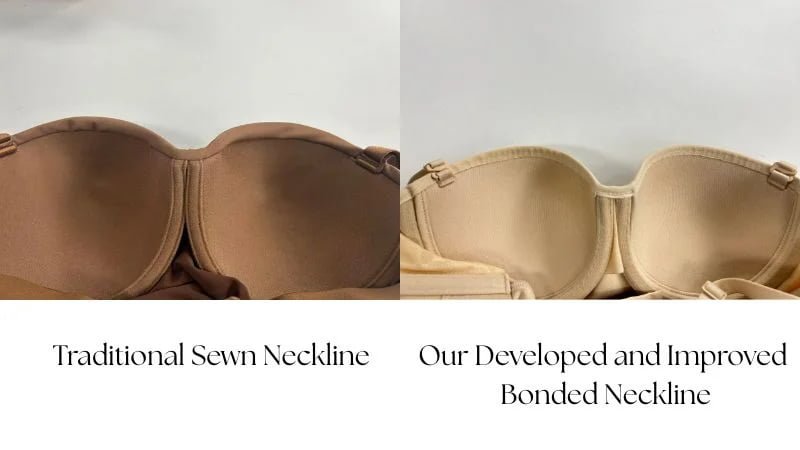
In a previous OEM project, a client sent us a shapewear sample with built-in foam cups and a traditionally sewn neckline for sample development. Having already developed similar products using bonded construction, we showed the client our bonded samples and suggested trying this technique for the neckline.
The client agreed, and we developed a revised sample with a smoother, more streamlined neckline finish. The client was very satisfied with the result and decided to adopt the bonded construction for subsequent bulk production.
This project demonstrates how practical manufacturing experience and different construction techniques can help improve an existing design, rather than simply reproducing the original sample.
Comparing Shapewear Manufacturing Methods
| Manufacturing Method | Suitable Applications | Main Advantages | Key Production Considerations |
|---|---|---|---|
| Cut‑and‑Sew | Structured bodysuits, support‑panel shapewear, plus‑size designs | Flexible panel construction and detailed support structures | Seam placement, cutting accuracy, fitting consistency |
| Seamless Knitting | Shaping shorts, briefs, selected bodysuits | Integrated stretch zones and fewer conventional seams | Yarn consistency, knitting tension, dimensions |
| Bonded and Free‑Cut | Invisible briefs, shorts and selected bodysuits | Low‑profile edges and reduced seam bulk | Bond strength, edge stability, wash durability |
If your collection covers multiple shapewear categories, working with a manufacturer that masters all three build methods gives you greater flexibility. Instead of forcing every design onto one fixed production workflow, you can match manufacturing technique to product purpose.
The Manufacturing Challenges Behind Modern Shapewear
Developing a sample with satisfactory aesthetics is only the initial phase. Real difficulty comes when scaling to commercial volumes: holding consistent shaping performance across the full size range and batch‑to‑batch production runs. Four practical challenges deserve close attention.
Compression Balance and Fabric Recovery
Shapewear must deliver targeted tension for shaping while staying flexible enough for daily human movement. This outcome comes from the interplay of fabric properties, garment pattern dimensions and real‑body shapes.
Two fabrics with identical fibre content can still perform very differently due to yarn specs, knit structure, finishing treatments and mechanical characteristics. Fibre composition alone cannot tell you if a fabric works for shapewear.
Lab tests such as ASTM D4964 measure tension and elongation on elastic textiles, and these give useful reference data for foundation‑garment material screening. Still, fabric lab results will never fully predict finished‑garment comfort or compression.
Test both raw materials and fully‑sewn finished samples before you sign‑off for bulk orders.
Waistband Rolling and Edge Stability
Waistband rolling is a common performance concern for high‑waisted shaping shorts and briefs. It occurs when garment dimensions, waistband tension, fabric recovery and body movement are mis‑aligned.
Simply making waistbands wider or cranking up compression will not always fix rolling issues. Waistband structure must be matched carefully to fabric properties and target body measurements.
Identical logic applies for leg openings and bonded edges: excess tension or insufficient stability ruins comfort and visual performance. When evaluating samples, test garments in sitting, standing and moving positions — flat‑table measurements do not capture real‑world behaviour.
Fit Consistency Across Sizes
Shapewear is far more sensitive to sizing variance than ordinary apparel. Its whole function relies on precisely controlled fabric stretch. Bad pattern‑grading creates large gaps of compression or comfort between different sizes.
This risk is amplified with bodysuits and plus‑size lines, as body proportions shift substantially up the size scale.
Review size specifications, pattern adjustments and physical fit‑samples of representative sizes before locking your official size chart. Consistent fit across sizes belongs to product development, it cannot be fixed purely by end‑line inspection.
Wash Durability and Shape Retention
Shapewear items get stretched repeatedly in wear and go through frequent washing cycles. Fabric relaxation, dimensional shift and loss of elastic recovery degrade shaping performance over time. Bonded seams and special finishes also need durability validation.
Relevant testing standards include ASTM D2594/D2594M for stretch‑growth performance of low-power knitted fabrics, though more supportive elastic constructions may need alternative testing protocols.
Agree clear product requirements and suitable testing protocols with your manufacturing partner before bulk starts. Do not rely on vague supplier marketing claims about elasticity.
Maintaining Quality from Samples to Bulk Production
An approved development sample represents your agreed‑upon design. But material lot changes, cutting tolerances, machine setting drift, bonded‑process parameters and assembly workmanship all shift during mass‑production, altering finished garment measurements and functional performance.
Quality control must go beyond visual final‑check inspection. Material verification, dimension audits and in‑process monitoring catch problems before thousands of units finish production. This matters especially for collections mixing multiple sizes, compression grades and construction styles.
The true value of an experienced shapewear factory is not just making beautiful prototype samples. It lies in reliably reproducing that approved sample quality for every large‑volume production batch.
Regional Shapewear Market Trends and Sourcing Requirements
Shapewear consumer expectations, sizing norms and retail rules differ around the world.
Grand View Research’s analysis shows North America generated 38.5% of global shapewear revenue in 2025, making it the single largest regional market. Meanwhile, Asia‑Pacific registers the fastest growth rate across the forecast period.
North America
North America has a mature shapewear retail scene covering everyday smoothing pieces up to heavy‑structured contour garments.
For suppliers serving this market, full‑range sizing, compression labelling and batch‑to‑batch product consistency are critical. Work always from your brand’s finalized size specs; do not assume one “North‑American fit standard” works for every retailer.
Europe
Europe’s lingerie market is well‑established, with high expectations for garment build quality, fit and material safety.
Product requirements shift between individual brands and national markets. Accurate size conversion tables, documented measurement sheets and material compliance paperwork are essential for OEM / ODM projects. Clarify destination‑market compliance requirements early in sourcing discussions; generic factory certificates do not automatically cover every finished product.
Asia Pacific
Asia‑Pacific offers strong growth potential, yet it is not one single uniform market. Climate preferences, body measurements and acceptable price points vary widely across countries.
These local realities change fabric choices, garment coverage and pattern decisions. A lightweight shaping short for one market will demand completely different material specs versus a heavy‑support bodysuit for another territory.
When sourcing, translate regional market needs into concrete technical specifications. Avoid forcing one single pattern and size chart onto every Asia‑Pacific territory.
What Should Brands Look for in a Shapewear Manufacturing Partner?
As shapewear products grow more diverse, picking your manufacturing partner should go far beyond comparing unit prices. Your factory needs to understand complex garment structures, assess project feasibility and sustain quality through full‑scale runs.
Multiple Manufacturing Capabilities
Different shapewear styles call for different production workflows. A factory that operates cut‑and‑sew, seamless‑knitting and bonded‑free‑cut workflows can evaluate what build method best fits each of your designs. This brings greater flexibility when you build multi‑category shapewear collections.
Practical Product Development Support
Tech packs and reference samples are your starting point, but many hidden production risks only surface during feasibility review. Fabric selection, compression‑zone layout, pattern adjustments and sample revisions all change final outcomes.
A knowledgeable manufacturing team flags foreseeable production pain points before you commit to bulk orders. In practice, this can mean recommending tweaks to waistband geometry, fabric elasticity or support‑panel placement to hit your fit target.
Quality Control and Production Consistency
Trustworthy manufacturers define clear acceptance criteria against your approved sample: finished‑garment measurements, visual workmanship, material performance and functional test benchmarks.
For complex shapewear, in‑process quality checks are more valuable than only final inspection. Your ultimate goal is stable batch‑to‑batch output.
At Bramingle, our development and production teams support brands with cut-and-sew, seamless knitted and bonded shapewear. We can review construction details, fabric requirements and fit adjustments against approved samples, while coordinating relevant production checks to help maintain consistency during bulk manufacturing. Working with a manufacturing partner that understands both creative design vision and hard production limits makes all the difference for launching successful shapewear lines.
Conclusion
The shapewear market is evolving beyond traditional shaping garments, with growing demand for everyday comfort, targeted compression, invisible finishes, and versatile designs.
Turning these trends into successful products requires the right fabrics, manufacturing techniques, fit development, and quality control. Working with an experienced OEM/ODM manufacturer helps brands achieve consistent quality from sampling to bulk production.
Develop Your Shapewear Collection with Bramingle
At XS Lingerie, we provide OEM and ODM shapewear manufacturing for lingerie and apparel brands, covering cut-and-sew, seamless knitted and bonded constructions.
From fabric selection and product construction to fit development, sampling and bulk production, we support brands with practical manufacturing solutions tailored to their specifications.
Have an existing design, reference sample or upcoming shapewear program? Share your tech pack, target order quantities and development timeline with our team. We can review production feasibility, sampling requirements and quotation details for your project. Contact us today!
Frequently Asked Questions About Shapewear Manufacturing
Q1: Is seamless shapewear always better than cut‑and‑sew options?
Not necessarily. Seamless knitting reduces visible seams, yet it has design limitations. Cut‑and‑sew construction offers greater flexibility for complex multi‑panel, plus‑size or heavily structured shapewear. The best manufacturing method depends on your target function, not just the “seamless” label.
Q2: Can I just enlarge my existing pattern to make plus‑size shapewear?
No. Shapewear performance relies on precise fabric tension. Simply scaling‑up patterns changes compression distribution. Plus‑size styles need adjusted torso length, waist‑hip proportions and re‑positioned support panels, plus physical fitting tests on representative sizes.
Q3: What causes waistband rolling on shaping shorts?
Waist rolling is rarely solved only by making a wider waistband. It comes from mismatches among garment dimensions, fabric recovery, waist‑band tension and human‑body movement. You need to test samples in sitting, standing and active conditions, not only flat measurements.
Q4: Are bonded / free‑cut edges durable for long‑term use?
It depends on the construction. Free-cut edges need suitable fabrics that remain stable without conventional hemming, while bonded edges depend on fabric-adhesive compatibility and bonding conditions. Both should be checked for durability and stability after laundering.
Q5: What documents should I prepare before contacting a shapewear OEM factory?
A complete tech pack with measurements, fabric requirements, compression expectations, size chart and reference samples or images. Clear specifications reduce miscommunication and shorten sampling cycles.