When brands and buyers evaluate potential lingerie suppliers, one of the first challenges they often face is a mismatch between their order plan and the supplier’s MOQ. A buyer may want to test a new style, launch with limited colors, or place a smaller first order, while the factory may require a higher starting quantity to make the project commercially workable.
This is one of the most common friction points in supplier selection, and it can directly influence project feasibility, cost planning, and launch timelines. MOQ (Minimum Order Quantity) is one of the most common and easily misunderstood issues in lingerie procurement. Many buyers wonder why MOQ varies across different factories, products, and projects.
This guide helps brands and buyers understand the key factors influencing lingerie moq and find a more suitable ordering method for their specific projects.
What Does MOQ Mean in Lingerie Manufacturing?
MOQ stands for Minimum Order Quantity. It is the minimum quantity a factory requires in order to move a product into production under workable commercial conditions.
In lingerie manufacturing, MOQ is not always based on total units alone. It may apply in several different ways.
The basic meaning of MOQ
| MOQ Type | What It Means |
|---|---|
| Per style | Minimum quantity required for one design |
| Per color | Minimum quantity required for each colorway |
| Per size range | Quantity requirement based on the size breakdown |
| Per order | Minimum total quantity for the full purchase order |
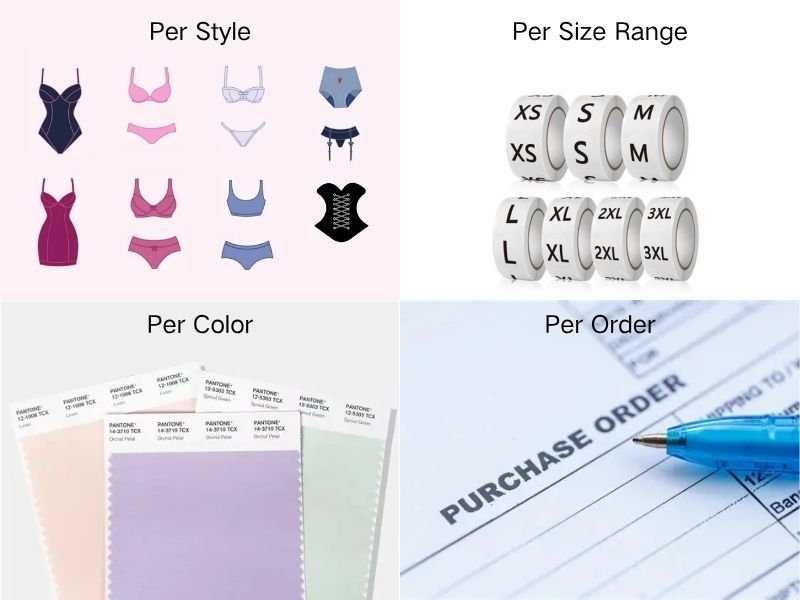
This is why two orders with the same total quantity can still have very different MOQ outcomes. For example, 3,000 pieces in one color may be workable, while 3,000 pieces split across five colors and many sizes may not be efficient for sourcing or production.
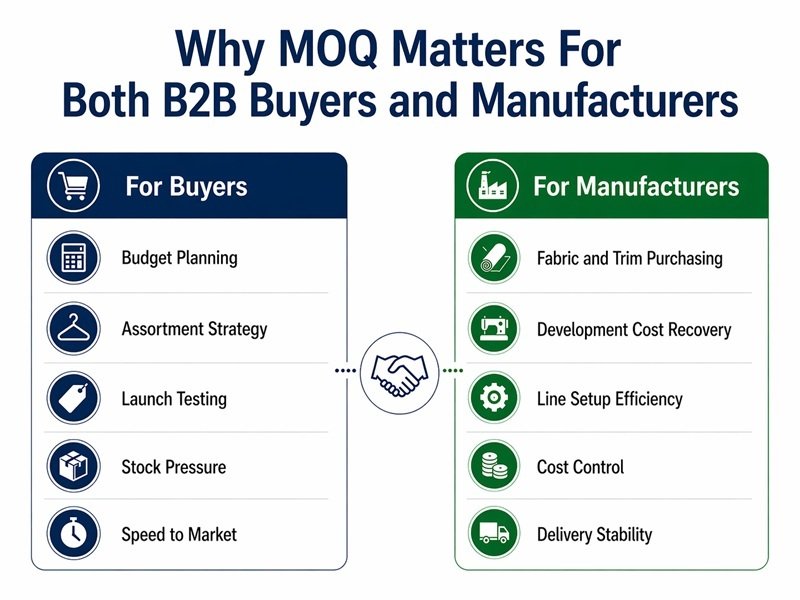
Why MOQ matters for both buyers and manufacturers
For buyers, MOQ affects:
- budget planning
- assortment strategy
- launch testing
- stock pressure
- speed to market
For manufacturers, MOQ affects:
- fabric and trim purchasing
- development cost recovery
- line setup efficiency
- cost control
- delivery stability
In short, MOQ is not just a number. It reflects the commercial structure behind the project.
Why MOQ Is Different from One Lingerie Product to Another
Not all lingerie products can follow the same MOQ standard. Some categories are easier to produce in smaller runs, while others require more volume to make the project viable.
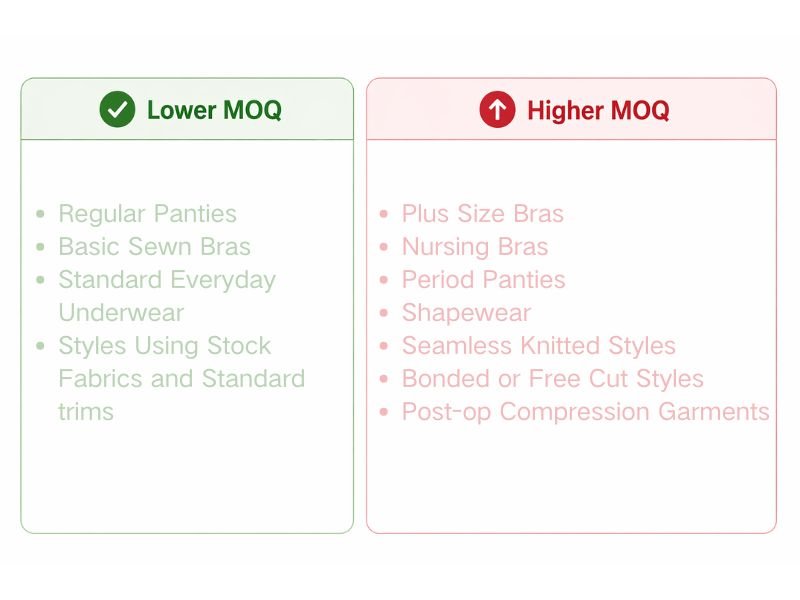
Basic styles usually have lower MOQ
These products are often more MOQ-friendly:
- regular panties
- basic sewn bras
- standard everyday underwear
- styles using stock fabrics and standard trims
These products are usually simpler in construction, easier to source, and easier to run on the production line.
Specialized styles usually require higher MOQ
The following categories often require higher MOQ:
- plus size bras
- nursing bras
- period panties
- shapewear
- seamless knitted styles
- bonded or free cut styles
- post-op compression garments
Why specialized products usually need more volume
| Product Type | Why MOQ Is Often Higher |
|---|---|
| Plus size bras | More technical support construction and fit development |
| Nursing bras | Functional details, clips, size variation, and comfort requirements |
| Period panties | Multi-layer structure and specialized functional fabrics |
| Shapewear | Compression engineering and more demanding workmanship |
| Seamless knitted styles | Programming, machine setup, and production planning complexity |
| Bonded / free cut styles | Material compatibility and technical bonding process control |
| Post-op garments | Performance requirements, structure, and often stricter quality expectations |
The key reasons for higher MOQs in these categories are: more complex product structures, more difficult manufacturing processes, higher development and testing costs, and stricter functional requirements.
The Main Factors That Affect MOQ in Lingerie Manufacturing
MOQ in lingerie manufacturing is usually influenced by several factors working together, not by one single issue. Understanding these will help buyers make more informed decisions and negotiate better with factories.
1. Fabric and trim availability
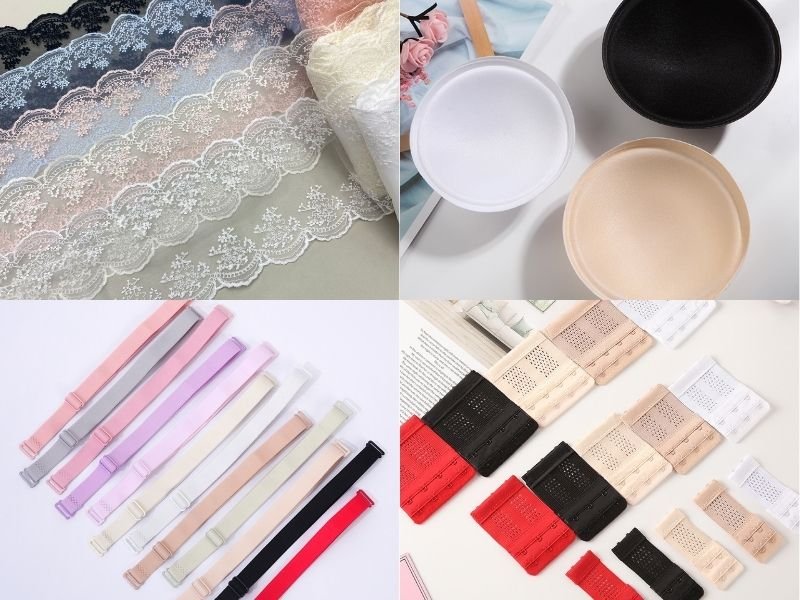
The availability of fabrics and trims is one of the most fundamental factors affecting MOQ. Orders based on in-stock fabrics, standard colors, and common trims, such as basic elastics or standard hook-and-eye closures, usually allow for lower minimums because the factory can work with existing materials and avoid additional sourcing costs.
In contrast, custom fabrics, such as exclusive prints, special fiber blends, or brand-specific shades, along with specialized trims like custom lace, logo hardware, signature straps, or molded cups, will often increase MOQ.
The reason is simple: upstream suppliers, including fabric mills, lace manufacturers, trim vendors, and dye houses, usually have their own minimums, and the factory must meet those requirements before production can begin. For example, custom lace programs often require a minimum quantity per color, especially when the design involves unique patterns, custom dyeing, or more complex lace construction.
2. Level of customization
The level of customization required for a lingerie order has a direct impact on MOQ. When a buyer works with a factory’s existing patterns, cup shapes, or proven design templates, MOQ is usually more flexible because the factory can avoid the added time and cost of new development.
By contrast, fully customized projects almost always require higher minimums, since each added customization creates more work in development, sourcing, sampling, and production setup.
Common customization elements that can push MOQ higher include:
- new pattern making
- cup development
- custom print development
- embroidery development
- logo accessories
- special packaging
The more customization involved, the more cost and uncertainty must be absorbed before bulk production begins. For private label brands, even relatively small branding elements can affect MOQ.
3. Product construction complexity
Examples include:
-
plus size bras with reinforced underwires and multi-layered support panels
-
period panties with 3-5 absorbent layers and leak-proof edges
-
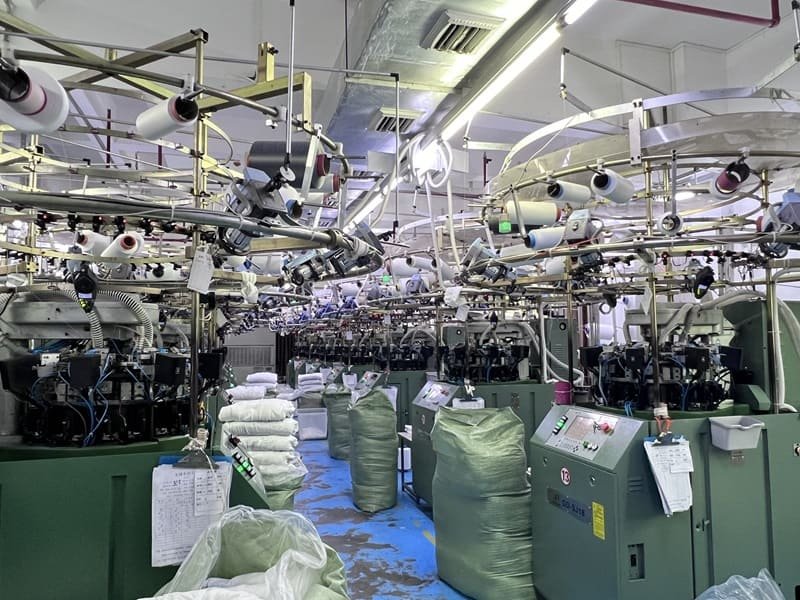
seamless knitted styles that require specialized circular knitting machines and precise programming
-
bonded/free cut styles that eliminate visible seams (requiring advanced bonding equipment and strict quality control)
Complex products require more time for machine setup, trial production, and quality inspection—costs that factories can only spread across a larger order quantity.
4. Color and size breakdown
A common misconception among buyers is that a high total order quantity will automatically lower MOQ. However, if an order is split into too many colors and sizes, the quantity per color per size may become too low, which can actually increase MOQ or make the order unfeasible.
This is because a small quantity per color/size reduces fabric utilization, slows down production efficiency , and complicates packaging .
For example, a 3,000-piece order may seem reasonable. But if that order is divided into:
- 5 colors
- 8 sizes
That results in only 75 units per color per size—far too few for efficient production.
5. Packaging requirements
Packaging requirements also play an important role in determining MOQ. Simple, neutral packaging, such as plain poly bags without branding, is generally easier to source in small quantities and therefore supports lower minimums.
In contrast, custom packaging will typically increase MOQ because it involves additional suppliers, setup costs, and production steps.
Common packaging elements that can push MOQ higher include:
- printed polybags
- folding boxes
- branded hangtags
- barcode stickers
- custom care labels
- retail-ready packaging sets
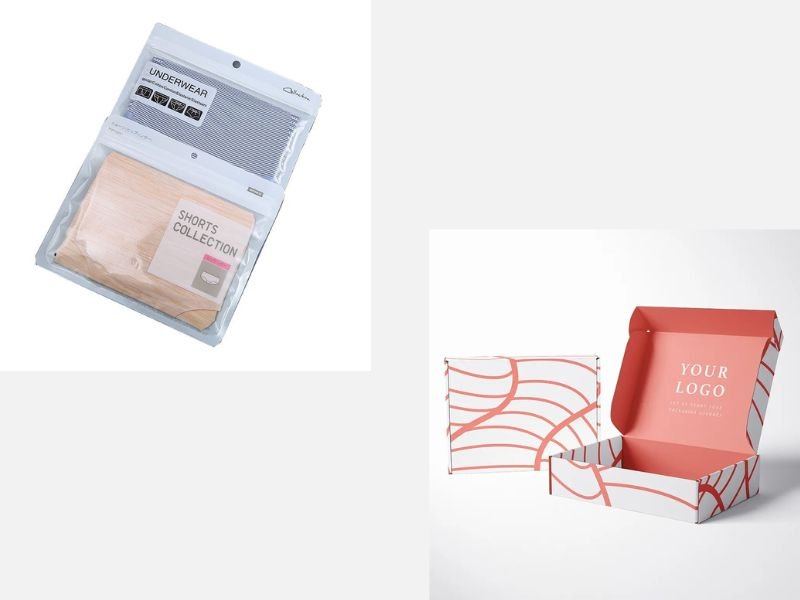
This is because packaging suppliers also have their own MOQs. For example, custom color boxes often require a minimum order of several thousand units to cover the cost of printing plates and production setup.
Even small customizations, like branded hangtags, can add to the MOQ if the supplier requires a minimum order quantity for printing. In practice, packaging is often an overlooked factor in MOQ planning, but it can significantly impact the overall order threshold, especially for private label projects.
In practice, packaging is often an overlooked factor in MOQ planning, but it can significantly impact the overall order threshold, especially for private label projects.
6. Production efficiency and line setup cost
Every new lingerie style requires production setup before bulk manufacturing can run efficiently. This usually includes machine adjustment, process confirmation, and first-piece inspection. These are fixed production costs, meaning they remain largely the same whether the order is large or small.
This is one of the main reasons MOQ exists. When the order volume is too low, those setup costs cannot be spread efficiently across enough units, making the project less workable from both a production and cost perspective.
For example, a seamless bra program may require machine programming and setup before production begins. If the order is very small, the factory may end up spending a disproportionate amount of time on preparation compared with actual output. Larger orders make it easier to absorb that setup time across more units, which improves overall production efficiency.
7. Supplier chain limitations
- lace suppliers
- fabric mills
- cup suppliers
- printing vendors
- packaging suppliers
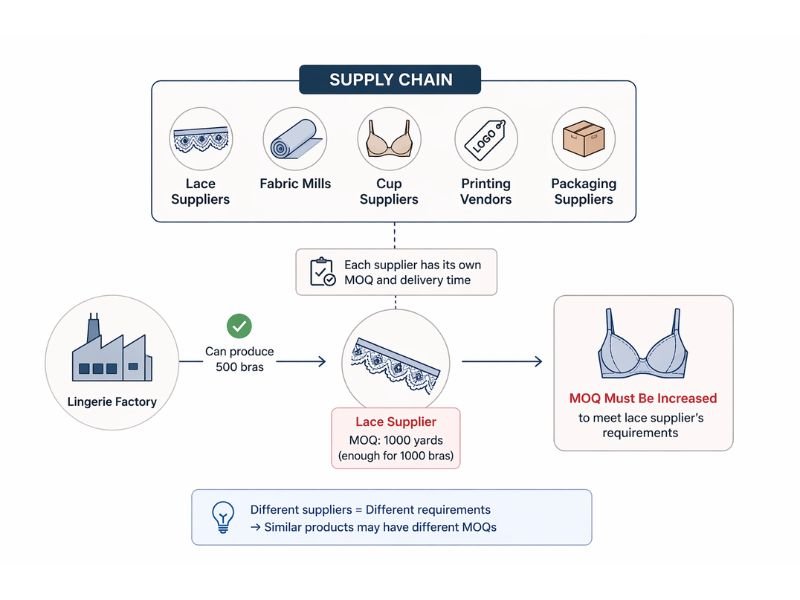
Each supplier has its own minimum order quantity and delivery time. For example, a factory may be willing to produce a small order of 500 bras, but if the lace supplier requires a minimum order of 1000 yards (enough for 1000 bras), the factory will have to increase the MOQ to meet the lace supplier’s requirements.
This is why two nearly identical lingerie products may have different MOQs—because they rely on different suppliers with varying requirements.
How Buyers Can Reduce MOQ More Realistically
The most effective way to reduce MOQ is not simply to ask for a lower number. It is to reduce project complexity in a practical way.
Practical ways buyers can make MOQ more manageable
| Buyer Action | How It Helps |
|---|---|
| Use stock fabrics and trims | Reduces sourcing difficulty and shortens development time |
| Start with fewer colors | Increases quantity per color and improves production efficiency |
| Focus on core sizes first | Reduces fragmentation and lowers inventory risk |
| Simplify packaging | Avoids extra minimums from packaging suppliers |
| Choose proven constructions | Lowers development cost and technical risk |
| Build a phased order plan | Gives the factory more confidence to support the project |
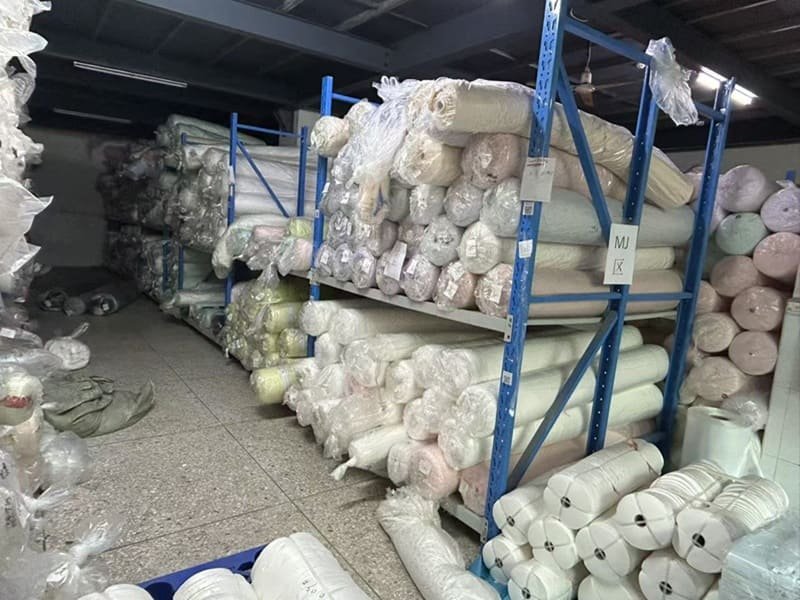
Use stock fabrics or existing materials
Choosing available materials is often the fastest way to reduce MOQ and shorten lead time.
Start with fewer colors
Avoid spreading the first order across too many colorways. It is usually better to focus on one or two core colors first.
Focus on core size ranges first
Instead of launching a full size range immediately, start with the most commercial sizes. This improves production efficiency and reduces stock pressure.
Simplify packaging for the first order
Basic packaging can be used for a trial run. Once the product is validated in the market, the buyer can upgrade to more branded retail packaging later.
Choose proven constructions
Starting from an existing style or a mature technical construction is often more workable than developing a completely new product from zero.
Build a phased order plan with the factory
A practical phased plan may look like this:
- Sample and fit approval
- First launch order with limited colors and core sizes
- Repeat order based on sales performance
- Expansion into more sizes, colors, or packaging options
Factories are often more open to supporting MOQ flexibility when they can see a realistic long-term plan.
MOQ Is Not Just About Quantity — It’s About Cost, Risk, and Efficiency
MOQ is not just a number—it reflects the comprehensive cost structure of a project.
MOQ is linked to:
- sourcing thresholds
- development effort
- production switching cost
- packaging minimums
- quality stability
- delivery planning
For buyers, understanding the logic behind MOQ is more valuable than simply negotiating for the lowest possible quantity.
By aligning your order requirements with the factory’s production needs, you can build a more collaborative relationship and achieve a balance between cost, quality, and delivery.
What Buyers Should Ask a Lingerie Factory About MOQ
Before confirming an order, buyers should ask clear questions to understand how MOQ is formed.
Key questions to ask
- Is the MOQ based on style, color, or total order quantity?
- Can stock fabrics or standard trims help reduce MOQ?
- Which trims or packaging items have separate minimums?
- Can the first order focus on core sizes only?
- Are repeat orders more flexible in MOQ?
- Which product categories usually require higher MOQ?
- How does color breakdown affect the minimum?
- What can be simplified to make the project more workable?
Clear MOQ communication early in the project helps avoid:
- inaccurate costing
- material shortages
- unexpected delays
- unrealistic expectations
- production inefficiency
Conclusion
MOQ in lingerie manufacturing is influenced by much more than order quantity alone. Fabrics, trims, customization level, product complexity, packaging, testing requirements, production setup, and supplier limitations all play a role.
For brands and B2B buyers, the best approach is not simply asking for the lowest MOQ. A better approach is to understand what drives MOQ and then build an order plan that balances product goals, budget, risk, and production efficiency.
A reliable lingerie manufacturer should not just give a MOQ number. They should help buyers understand how that number is formed, what options can reduce it, and how to plan strategically for first orders, repeat orders, and long-term product development.
That is where real B2B value begins.
FAQ
Q1. Why do lingerie manufacturers have MOQ requirements?
Lingerie manufacturers set MOQ to cover material sourcing, product development, production setup, and supply chain costs. MOQ helps make an order commercially workable and operationally efficient.
Q2. Is MOQ based on total order quantity or per style?
It depends on the manufacturer and the product. MOQ may be based on total order quantity, per style, per color, or even per size range.
Q3. Why can the same total quantity still be rejected by a factory?
Because the total quantity may be split across too many colors and sizes. If the quantity per color or per size is too low, production may become inefficient.
Q4. Do custom fabrics and trims increase MOQ?
Yes. Custom fabrics, lace, logo trims, molded cups, and special dyeing usually increase MOQ because upstream suppliers often have their own minimum order requirements.
Q5. Why do custom colors often require a higher MOQ?
Because dye houses usually need a sufficient fabric quantity before they can run a dye lot. Small quantities are often not enough to support custom color production efficiently.
Talk to Us About Your Lingerie MOQ Plan
From stock-based developments to more customized private label projects, we can help you understand what drives MOQ and how to structure your order in a more efficient way for both sampling and bulk production.
If you have any questions, please feel free to contact us!
Supported formats: PDF, DOC, DOCX, JPG, PNG, XLS, XLSX, ZIP
Sending…
By submitting this form, you agree to our privacy policy.