Seamless and bonded lingerie are two of the most important construction technologies behind today’s comfort-focused intimate apparel. They are widely used in wireless bras, panties, shapewear, nursing bras, teen bras and sports bras, but the two are quite different both visually and technically.
In most finished products, the difference can already be seen in the fabric structure, edges and overall construction. Seamless lingerie usually has the characteristics of a knitted garment because much of the body is formed directly on a circular knitting machine. Bonded lingerie normally has a smoother cut-panel appearance because it starts with finished fabric and uses bonding technology to join, reinforce or finish selected areas.
The bigger difference, however, is found in how the garments are made. Seamless lingerie starts with yarn and builds much of the garment structure during knitting. Bonded lingerie starts with finished fabric, which is cut into garment components before bonding is applied.
Both technologies are particularly relevant to the modern lingerie market because they support many of the same product directions: softer construction, wireless comfort, stretch, cleaner surfaces and reduced reliance on conventional seams. But that does not mean the two technologies are interchangeable. They create structure in different ways, and they are not equally practical for every lingerie category.
This article explains how seamless and bonded lingerie differ in manufacturing, construction and product application, helping lingerie brands understand which technology is more suitable for different bras, panties, shapewear, sports bras and other intimate apparel products.
What Is Seamless Lingerie?
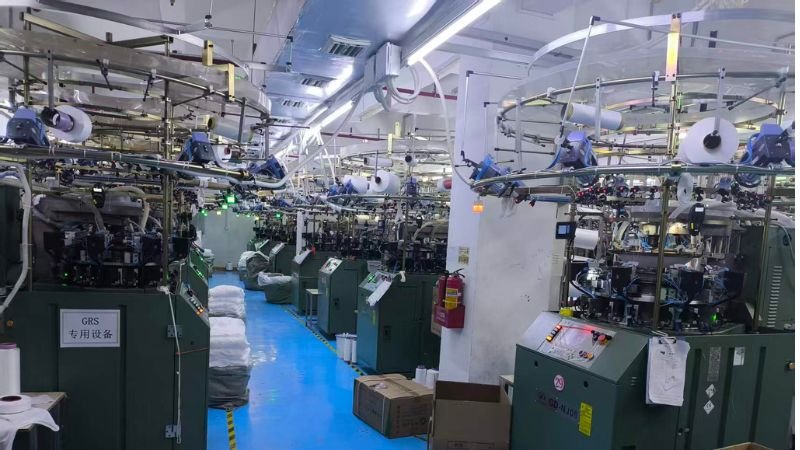
Seamless lingerie is primarily produced using circular knitting technology. Unlike conventional cut-and-sew lingerie, where a factory buys finished fabric, cuts individual garment panels and then sews them together, seamless production begins with yarn.
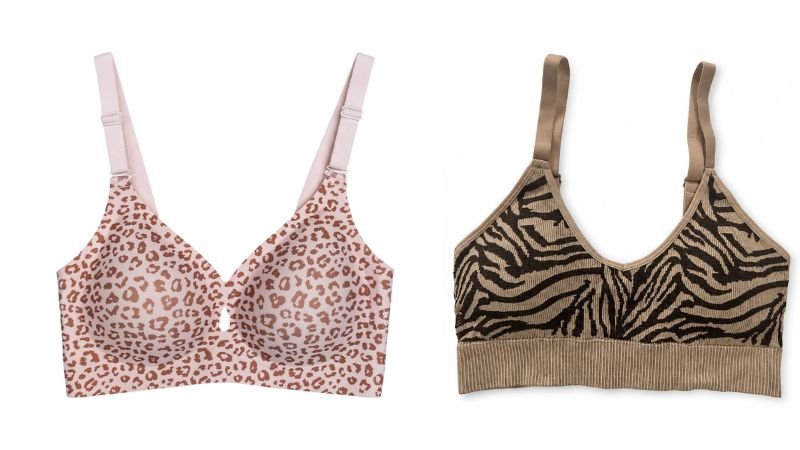
The yarn is fed directly into an electronic circular knitting machine, which knits much of the garment body into a tubular form. The structure of the garment is controlled through the knitting program rather than being created entirely through cut fabric panels. This is one of the biggest differences between seamless lingerie and most other lingerie constructions. For a finished product example, see our seamless knitted wireless bra.
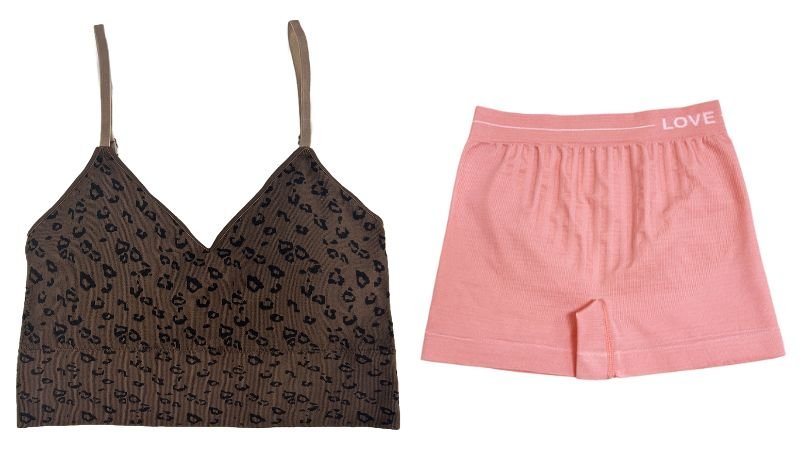
The knitting process can create different structures within the same garment. A manufacturer can change knitting density, elasticity or structure in different areas to achieve different functions without necessarily adding another cut fabric panel.
For example, a seamless shapewear garment may have a firmer knitted structure across the abdomen and a more flexible structure around the hip or seat. A seamless bra can use a different knit structure around the underbust area from the main body. Sports products can also incorporate different knitted zones for stretch, support or ventilation.
This ability to create function during knitting is one reason seamless technology is used across a much wider range of products than just seamless panties.
Santoni, one of the established manufacturers of seamless circular knitting equipment, lists underwear, lingerie, sportswear, swimwear and shapewear among the applications of its electronic seamless knitting machines. This reflects how broadly the technology is now used across intimate apparel and related categories.
Seamless Does Not Always Mean “No Stitching Anywhere”
The word seamless can sometimes create the impression that the finished garment comes directly off the knitting machine with absolutely no sewing. That is usually not the case. The main body of the garment may be knitted without conventional side seams, but additional operations can still be required depending on the product.
A seamless bra may still need cup components, padding, straps or hardware to be attached. A panty still needs a functional gusset construction. A nursing bra needs access construction and nursing components. Other products may require cutting, trimming, sewing or additional finishing after knitting.
From a manufacturing point of view, this distinction is important. Seamless technology reduces the dependence on traditional cut-and-sew construction in the garment body, but it does not mean that every other lingerie-making process disappears.
When we develop a seamless product, the real question is therefore not whether we can remove every visible stitch. It is which parts of the garment can be created through knitting and which parts still need additional construction to deliver the required fit and function.
What Is Bonded Lingerie?
Bonded lingerie starts from a very different point. Instead of beginning with yarn, bonded lingerie normally begins with finished fabric.

The required garment components are first cut from the fabric. Depending on the design, the factory may then use bonding film, bonding tape or another suitable bonding layer between selected materials. Heat and pressure are applied during the bonding process to join or reinforce these areas. This construction allows the manufacturer to work with individual panels while reducing conventional stitching in selected parts of the garment.
In a wireless bra, for example, bonding may be used around the wings, underband, cup area or reinforcement sections. In panties, it may be used at the waist or leg openings. In shapewear, additional fabric layers can be bonded over selected areas to create stronger local control.
Because bonded products begin with finished fabric, the structure is usually much closer to a cut-panel garment than to a knitted seamless garment.
This is also why bonded lingerie often has a noticeably different appearance from seamless lingerie. The surface can be very smooth, the edges can be extremely flat, and the product can combine different cut components without relying on the knitted appearance and structure associated with seamless manufacturing. For comparison, see our free-cut bonded wireless bra.
For lingerie brands, the most useful way to understand the distinction is therefore simple: seamless creates much of the garment through knitting. Bonded creates the garment from cut fabric components and uses bonding where the product needs joining, reinforcement or a flatter finish.
Which Lingerie Products Can Be Made with Seamless or Bonded Technology?
There is substantial overlap between the product categories that can be produced with seamless and bonded technologies. In our experience as a lingerie manufacturer, both technologies are most commonly used in product ranges built around comfort, stretch and wireless construction. This is why the same category—such as a daily wireless bra—may have both seamless and bonded versions on the market even though the two products are manufactured very differently.
The major applications can be summarized as follows:
| Lingerie Category | Seamless Technology | Bonded Technology | Manufacturing Perspective |
|---|---|---|---|
| Daily wireless bras | Yes | Yes | Both work well for comfort-focused wireless products, but the structures are created differently |
| Panties | Yes | Yes | Seamless creates a knitted garment body; bonding can create very flat cut edges and cleaner finishes |
| Nursing bras | Yes | Yes | Both suit soft wireless construction; nursing access and components still require additional engineering |
| Shapewear | Yes | Yes | Seamless uses knitted compression structures; bonding can add targeted reinforcement layers |
| Teen bras | Yes | Yes | Both are well suited to soft, lightweight and wireless bra concepts |
| Sports bras | Yes | Yes | Both technologies can be used, with the final construction depending on the required support level |
| Period underwear | Rarely used as the main construction | Yes | The multi-layer functional gusset makes bonded or other panel-based construction more practical |
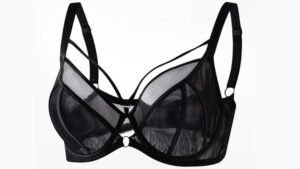
| Sexy lingerie | Generally not the main choice | Generally not the main choice | The category relies more heavily on lace, mesh, straps, decorative details and visual impact |
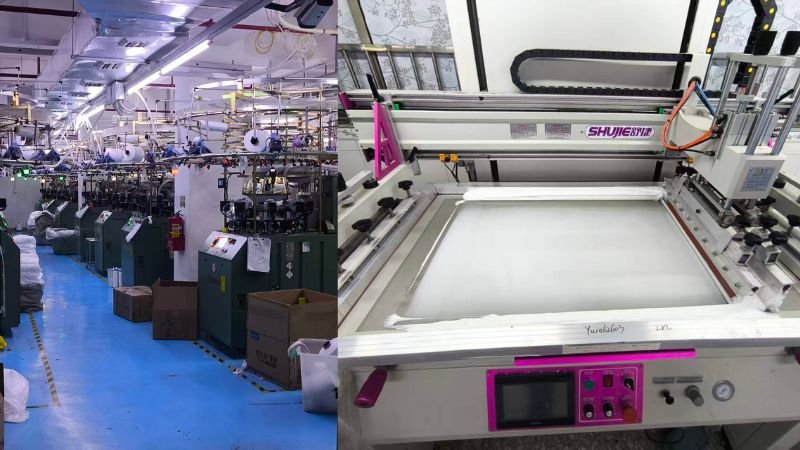
Seamless and Bonded Technologies Can Be Used in the Same Lingerie Product
Seamless and bonded should not always be treated as two technologies that a brand has to choose between. They can also be used within the same garment. We have used this approach in our own product development.
One lingerie set we developed was based primarily on seamless construction. The garment body used seamless knitting to achieve the stretch, comfort and overall appearance we wanted, but selected edges were finished using bonding technology. In other words, the product remained fundamentally a seamless style, while bonding solved a specific finishing requirement. This is a good example of how manufacturing decisions actually work in product development.
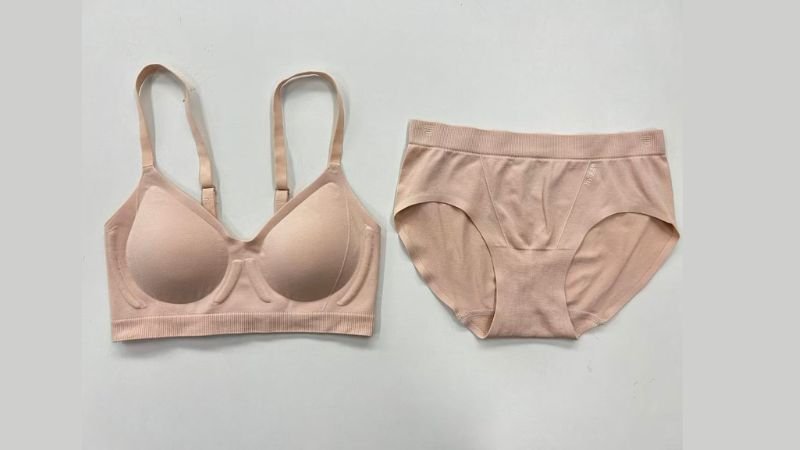
The question was not:
Should this product be seamless or bonded?
The question was:
Which technology gives us the best result in each part of the product?
Seamless knitting was more suitable for the main body, while bonding provided a flatter and cleaner solution at the selected edges. The same principle can be applied to other lingerie products. A manufacturer might use a seamless knitted structure for the main garment and bonding for specific reinforcement or finishing areas. Another product might use bonded panels together with conventional sewing where stronger mechanical attachment is required.
This kind of combination is often described as hybrid construction. The important point is that hybrid construction should have a reason. Using more processes does not automatically make a lingerie product more advanced. Every additional material and manufacturing step adds another element that needs to be controlled during development and bulk production.
The value comes from using each technology where it performs best. For brands, this gives much more flexibility than thinking of seamless and bonded as two completely separate product categories.
FAQ
Q1: What is the main difference between seamless and bonded lingerie?
The main difference is the manufacturing starting point. Seamless lingerie begins with yarn and uses circular knitting to form much of the garment body, while bonded lingerie begins with finished fabric that is cut into components and bonded in selected areas.
Q2: Can the same lingerie category be made with both seamless and bonded technology?
Yes. Daily wireless bras, panties, nursing bras, shapewear, teen bras and sports bras can all be produced using either technology. The difference is mainly in how the garment structure, stretch, support and finishing are created.
Q3: Can period underwear be made with seamless technology?
It is technically possible to incorporate seamless knitting into some designs, but seamless construction is rarely used as the main production method for period underwear. The multi-layer absorbent and leak-resistant gusset normally makes panel-based construction, including bonding in selected areas, more practical.
Q4: Are seamless and bonded technologies suitable for sexy lingerie?
They can be used in selected parts of a design, but they are generally not the primary technologies for this category. Sexy lingerie relies heavily on lace, mesh, decorative elastics, straps, hardware and other visual details, so conventional cut-and-sew construction normally offers greater design freedom.
Q5: Can seamless and bonded technology be combined in one product?
Yes. A garment can use seamless knitting for its main body and bonding for selected edges, reinforcement or finishing areas. We have used this type of hybrid construction in our own lingerie development when the two technologies provided different advantages within the same product.
Conclusion
Seamless and bonded lingerie are easy to place under the same “modern comfort lingerie” umbrella, but they are fundamentally different manufacturing technologies. Seamless lingerie begins with yarn and uses circular knitting to create much of the garment body and its functional structure. Bonded lingerie begins with finished fabric, which is cut into components before selected areas are joined, reinforced or finished through bonding.
Their applications overlap considerably. Daily wireless bras, panties, nursing bras, shapewear, teen bras and sports bras can all be developed using either seamless or bonded technology. Both approaches fit particularly well with the current market for comfortable, soft and wire-free lingerie, although they achieve these results through different constructions.
There are also clear exceptions. Period underwear depends heavily on a multi-layer functional gusset, making panel-based and bonded construction much more practical while seamless construction is rarely used as the primary solution. Sexy lingerie has a different priority altogether: lace, mesh, decorative details and visual impact normally make traditional cut-and-sew construction the more appropriate foundation.
Most importantly, seamless and bonded do not always need to be separated. As our own product development experience shows, a garment can use a seamless knitted body while applying bonding where a flatter or cleaner edge is required. The two technologies can complement each other when the product structure calls for it.
For lingerie brands, the practical conclusion is therefore not that seamless is better than bonded, or vice versa. The right construction depends on the product category, the function the garment needs to perform and the result the brand wants to achieve.
Understanding that difference makes it easier to communicate with a manufacturer, select a realistic construction at the development stage and avoid forcing a product into a manufacturing technology that does not suit its purpose.
Develop Seamless and Bonded Lingerie with an Experienced Manufacturer
Bramingle manufacture both seamless and bonded lingerie, with in-house Santoni seamless knitting machines and established bonding production capabilities. Over the years, we have worked with lingerie brands to develop and successfully launch seamless and bonded bras, panties, shapewear and other comfort-focused intimate apparel.
Our experience with both technologies allows us to look beyond a single manufacturing method. Depending on your product design, fit, support and finishing requirements, we can help evaluate whether seamless knitting, bonding, or a combination of both technologies is the more practical solution for development and bulk production.
If you are planning to develop a seamless or bonded lingerie collection, or simply want to understand more about the technologies, materials and construction options available, contact us to discuss your project with our team.